“Sleeper, Senior Man Diptych” Two drawings, 9 × 12 inches each, Crayon on Rives BFK paper
This is a handmade, original work of art NOT A PRINT and NOT AI GENERATED
FREE SHIPPING Shipping takes 3–4 Weeks This ships from San Carlos, California (The San Francisco Bay Area). I use UPS and sometimes US Post.
These two original drawings are sold together as a diptych. The price is $500 for the pair.
I wanted to put these sleepers together to compare our notions about age and race with my feelings about sleep. The pose and the arrangement of the body, pillow, and bedding are closely related. Changes in skin tone, apparent age, musculature, hair, and beard can nevertheless change how we identify a person and whether we identify with him. I'm interested in how much of what we think we know about someone comes from those visual clues.
The repeated composition gives me a way to make that comparison. In both drawings, the head rests toward the left, the shoulder and arm carry the eye downward, and the pillow's folds spread out behind the figure. Broad passages of crayon shading give the bodies weight. Looser contours and short, curling marks describe hair, beard, and the folds of the bedding. The same general arrangement produces two different encounters with a sleeping man.
Sleep has become more complicated for me as I've gotten older. When I was young, I took sleeping in for granted. Now I sleep more lightly and sleep less. I've also always had night terrors. Dreams can magnify the anxieties, desires, jealousies, and fears I carry through the day. What looks restful from the outside may be a very different experience for the person asleep.
That is part of the allegory for me. We can look closely at the body and still know very little about the person. Sleep also brings vulnerability and mortality into the picture. Its old association with death matters more to me as I age, even while I still want the ordinary pleasure of a good night's sleep. Putting the drawings together lets me consider those shared experiences alongside the differences that shape our first impressions.
I photographed the drawings on black felt to show the edges of the paper and how the compositions sit on the sheets. The black felt is only a photographic backdrop and is not part of either artwork.
 Image 1 of 7
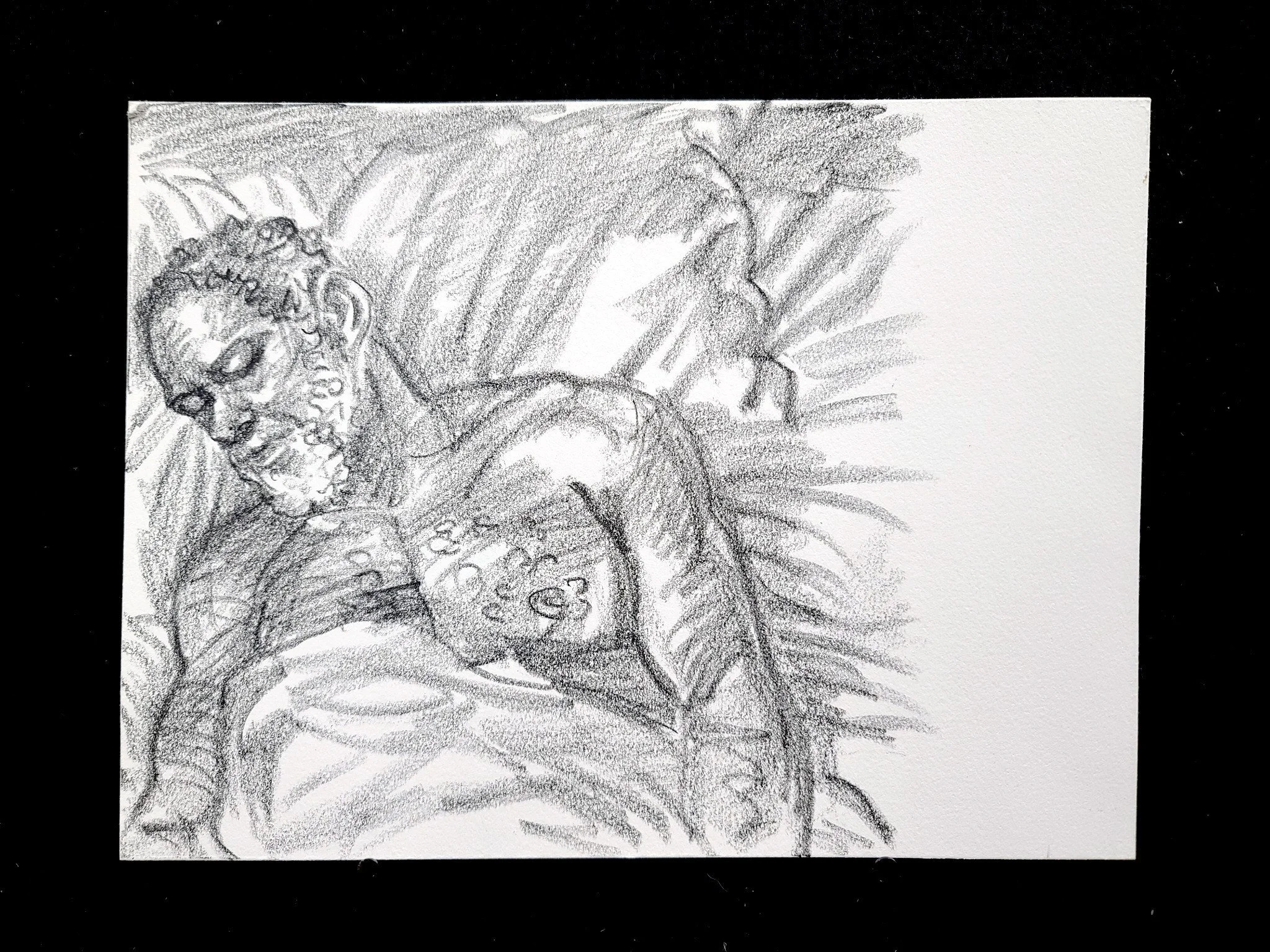 Image 2 of 7
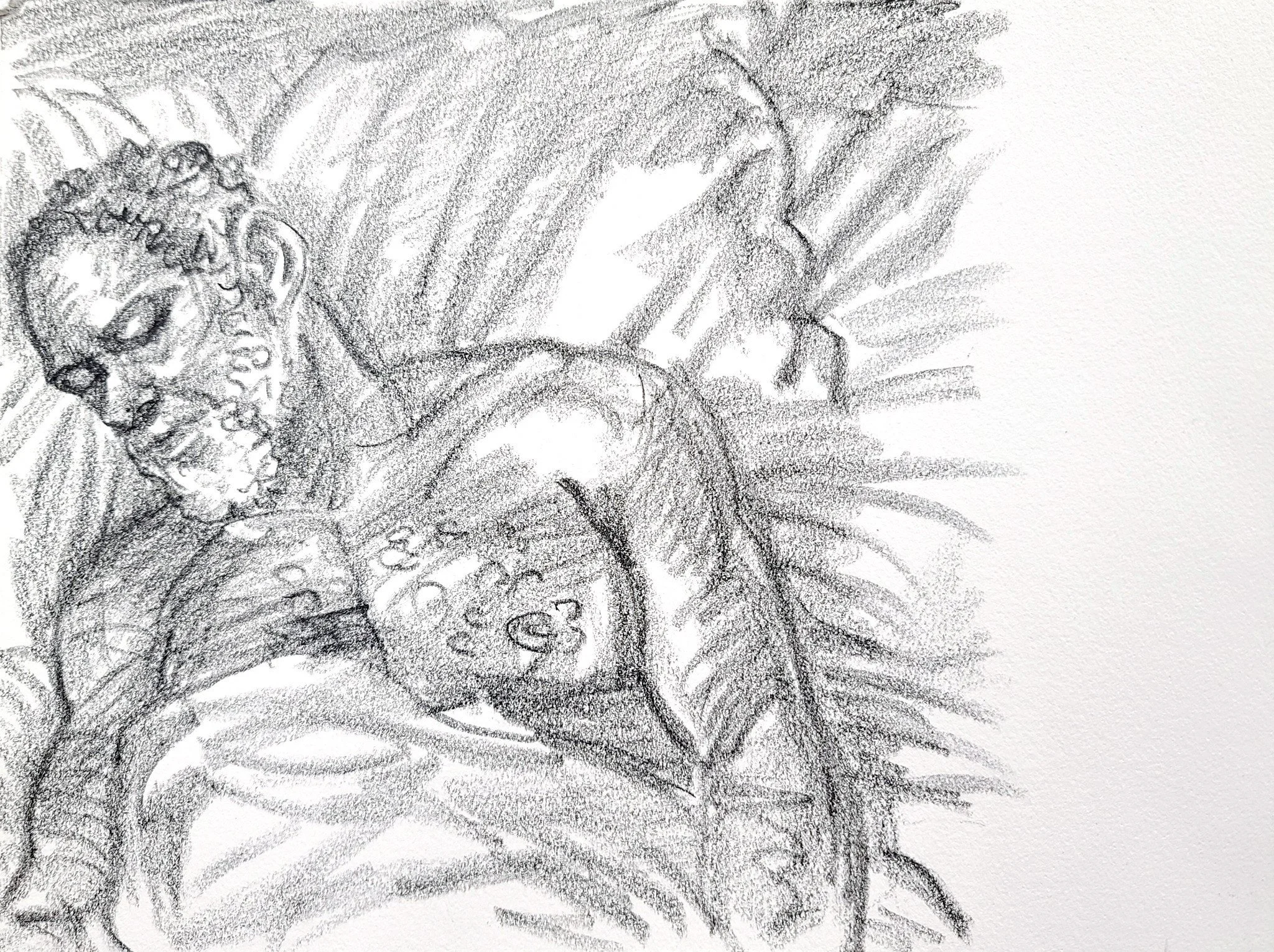 Image 3 of 7
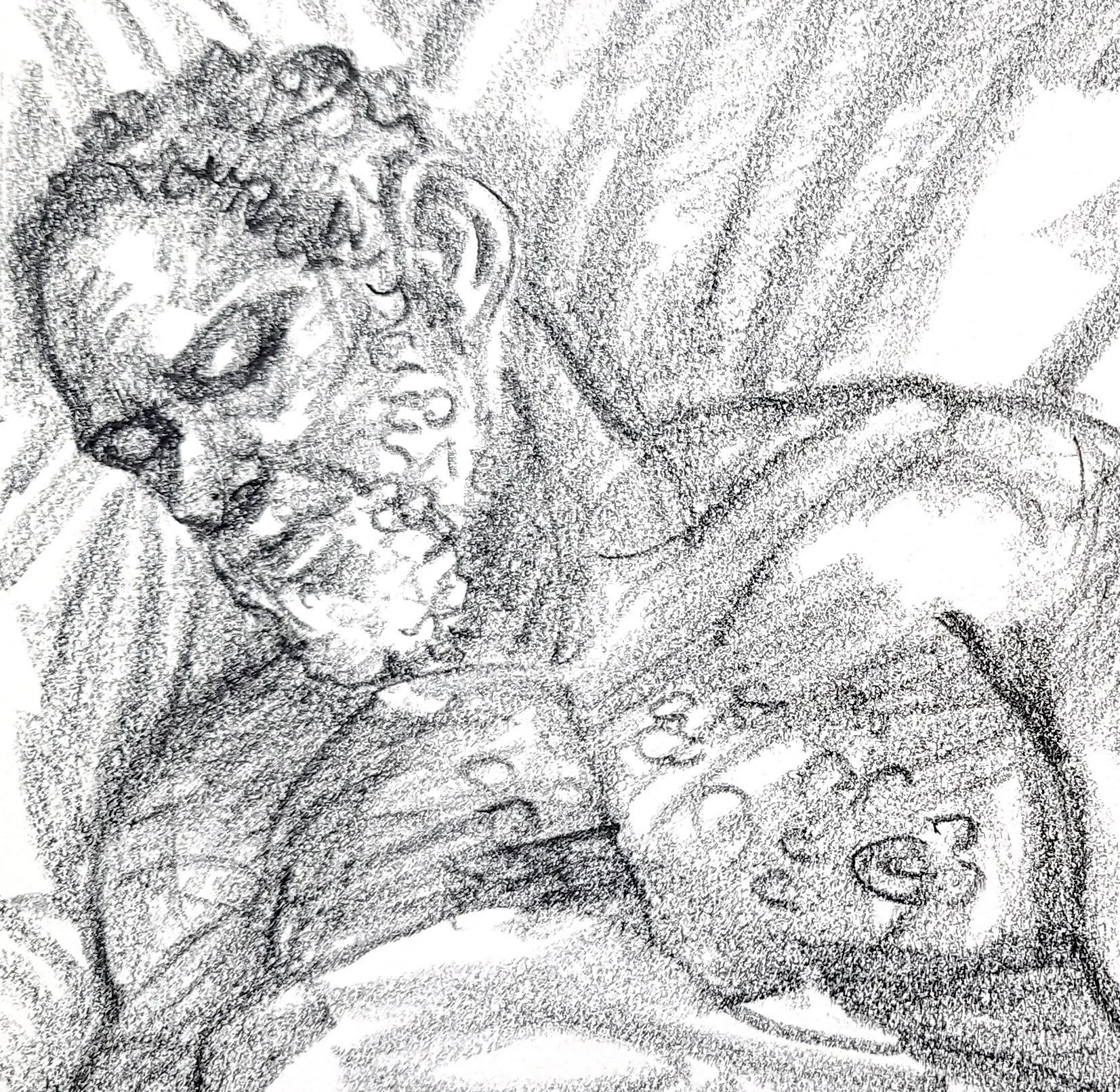 Image 4 of 7
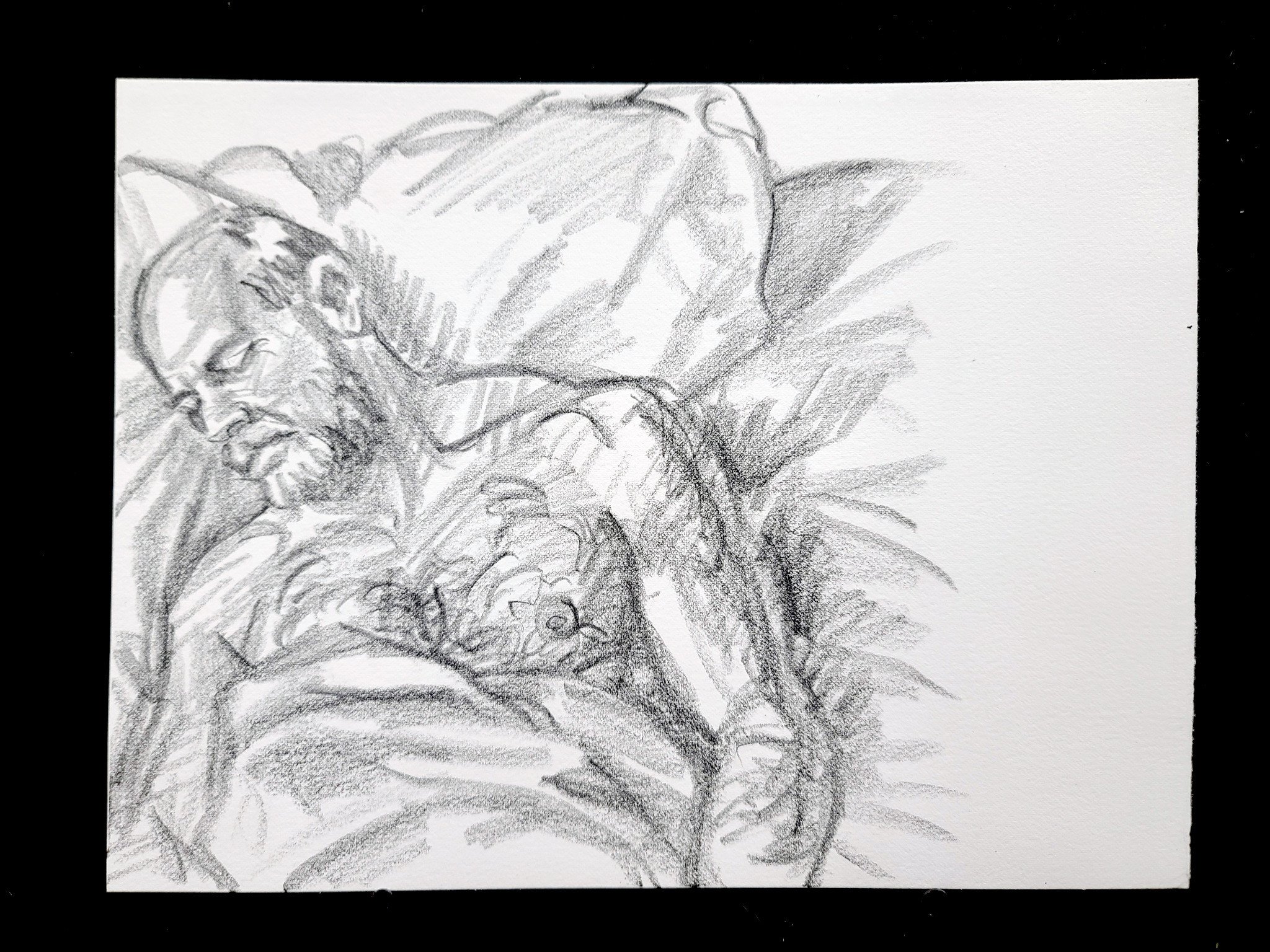 Image 5 of 7
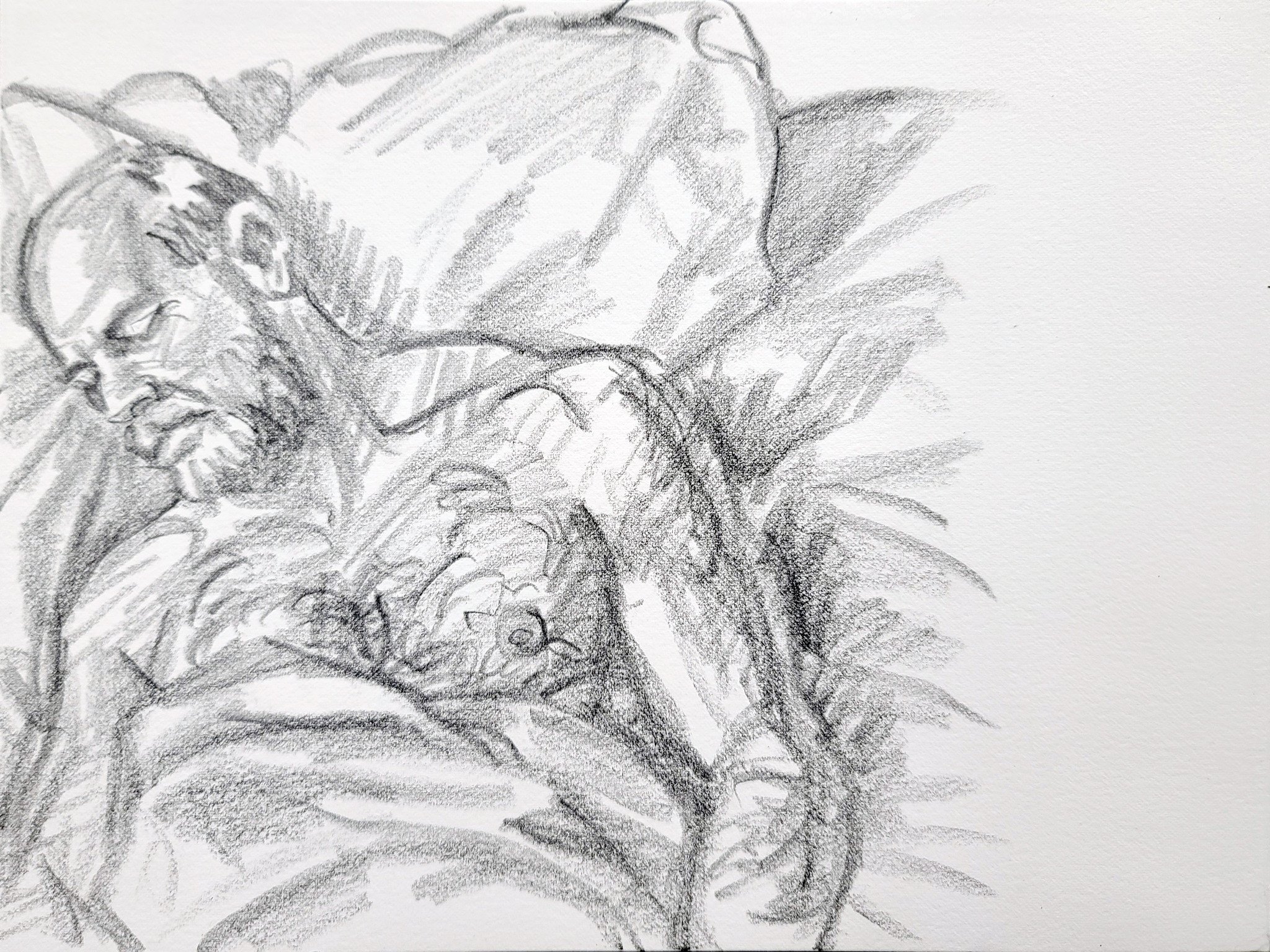 Image 6 of 7
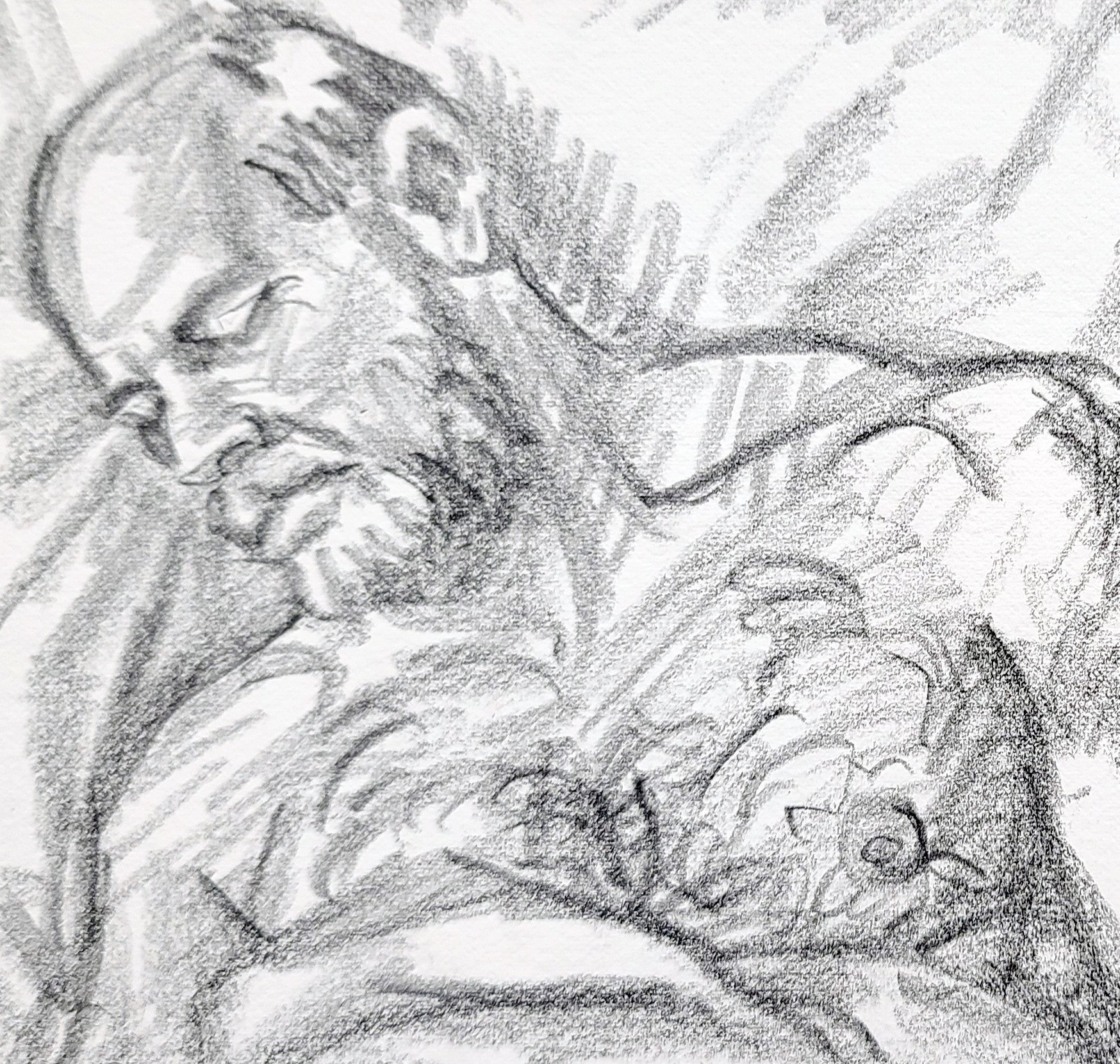 Image 7 of 7


