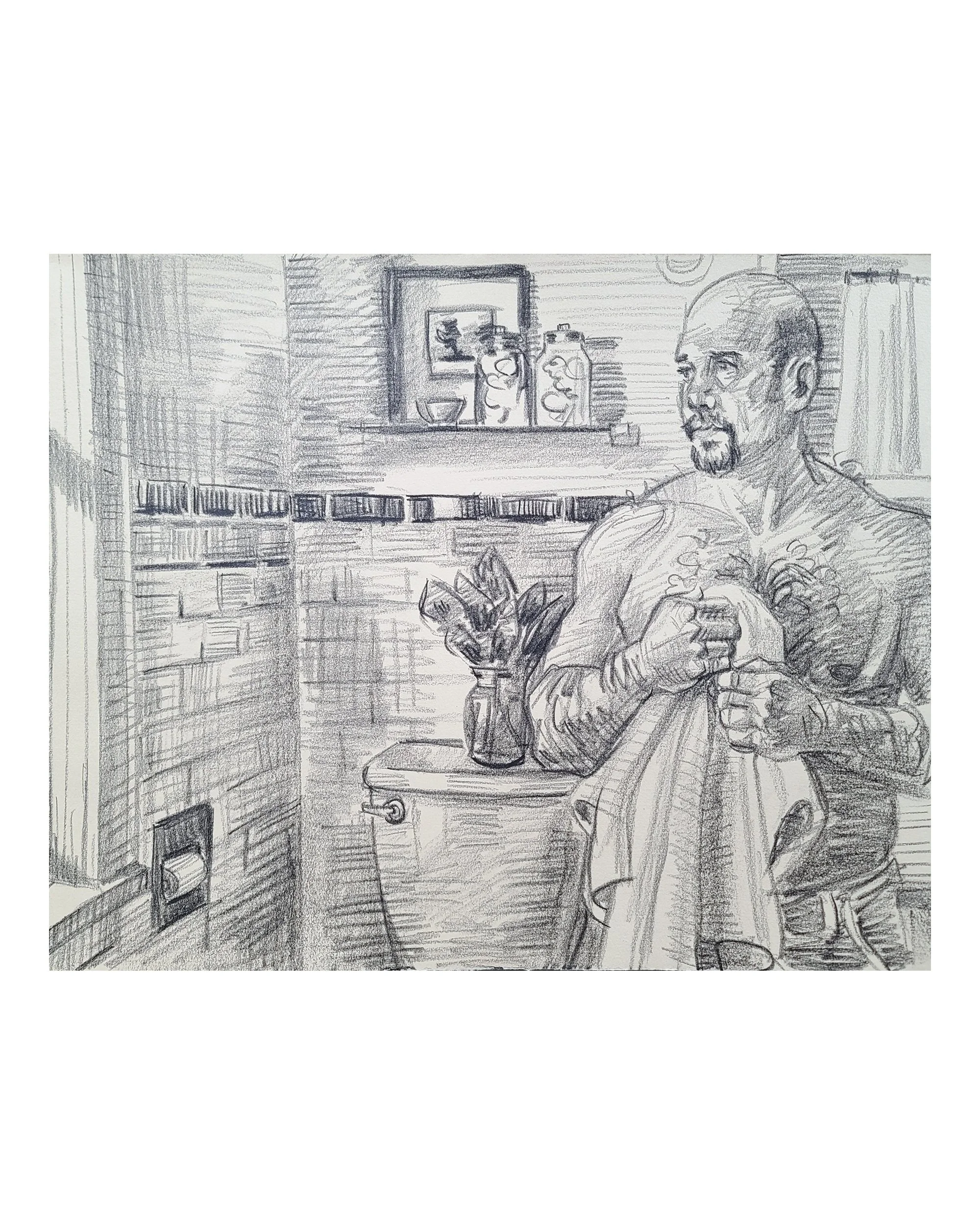
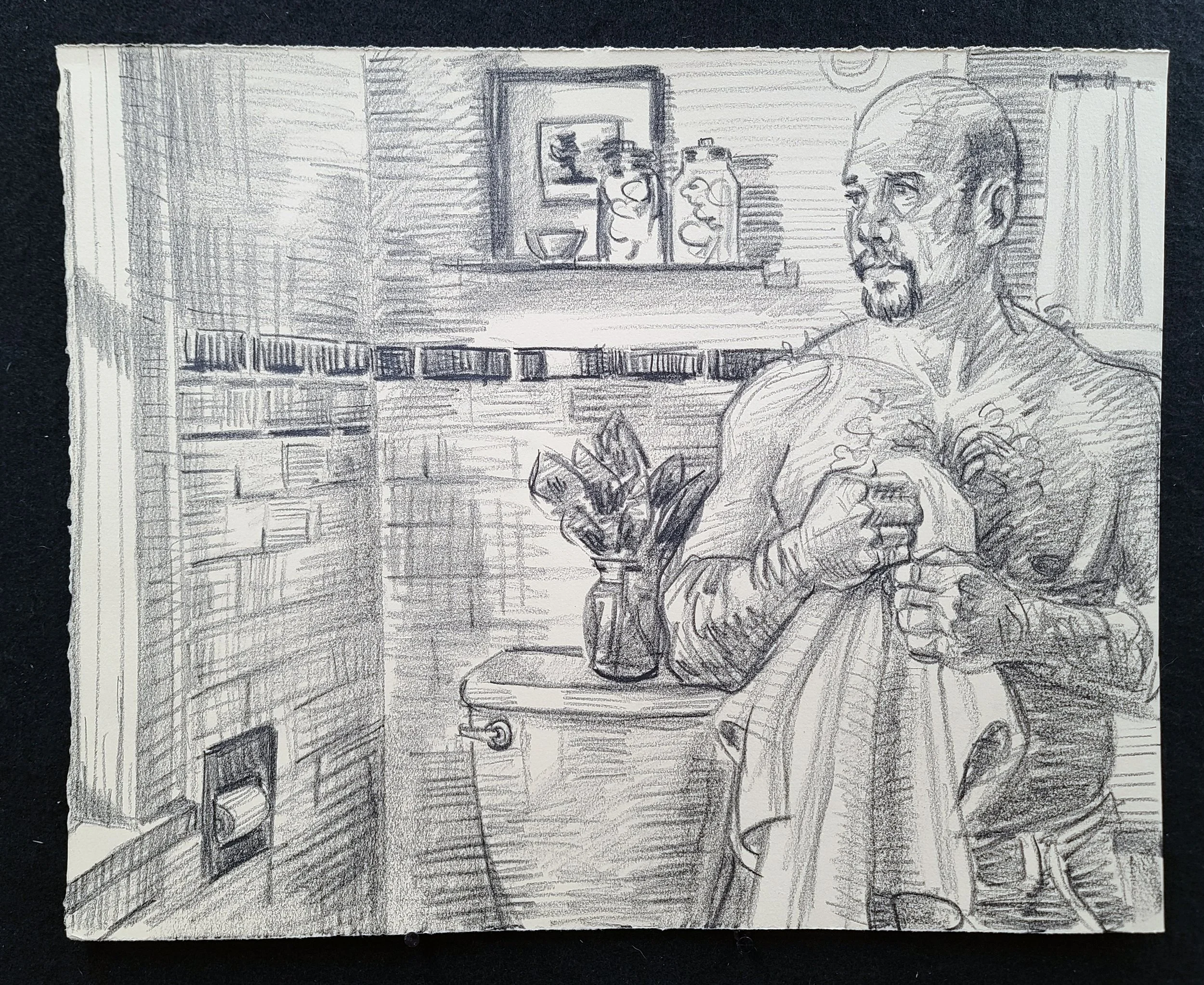
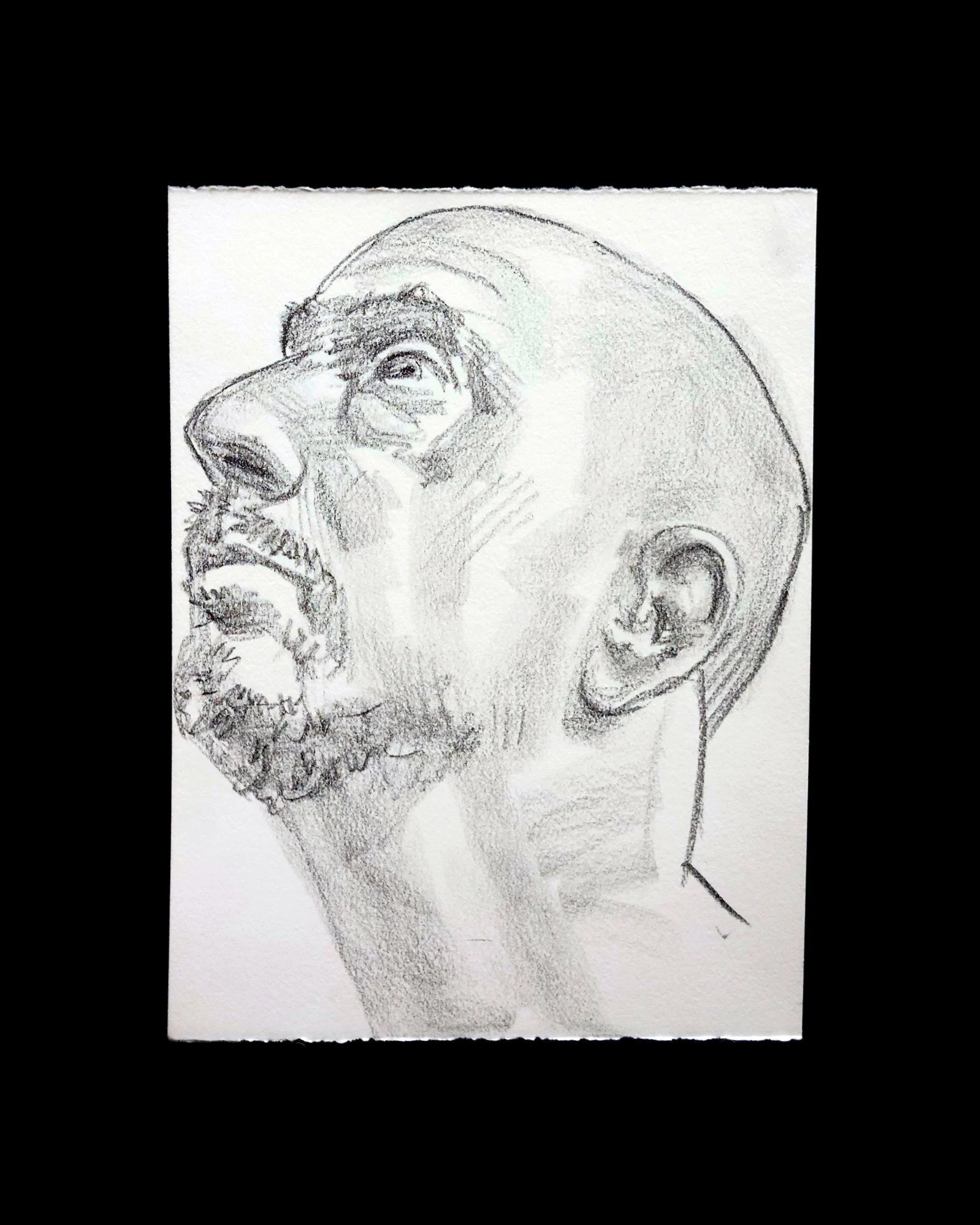
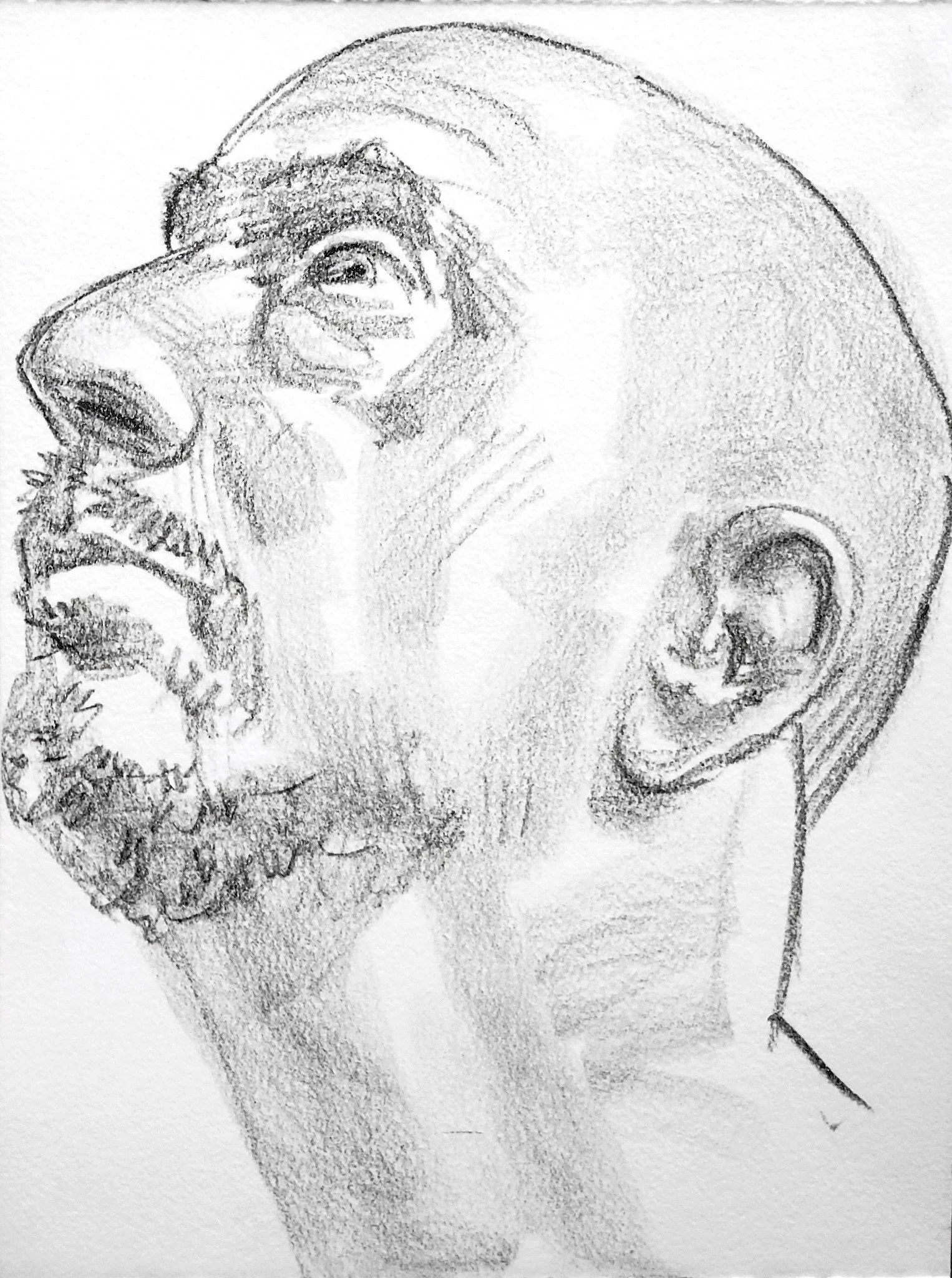
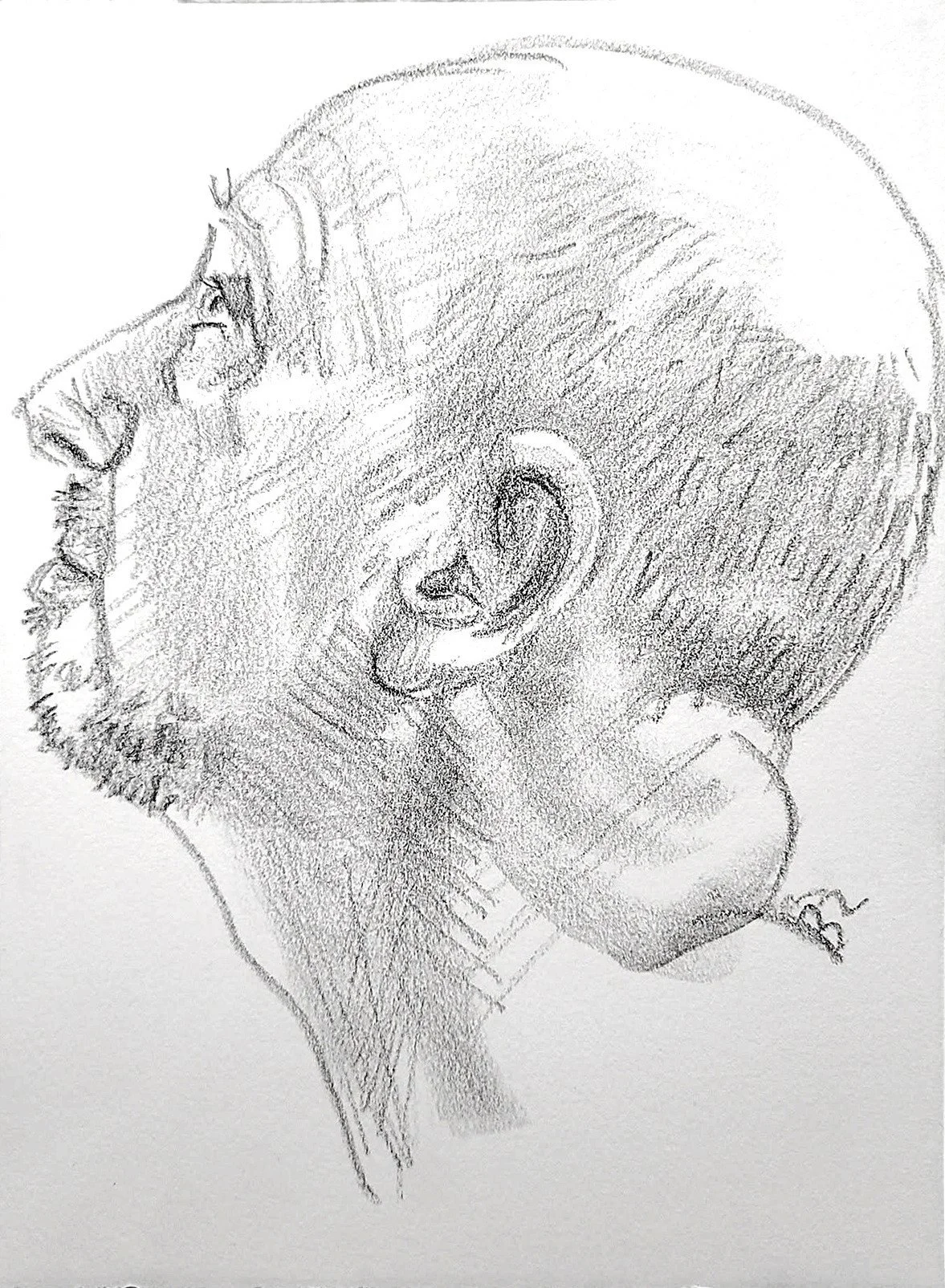
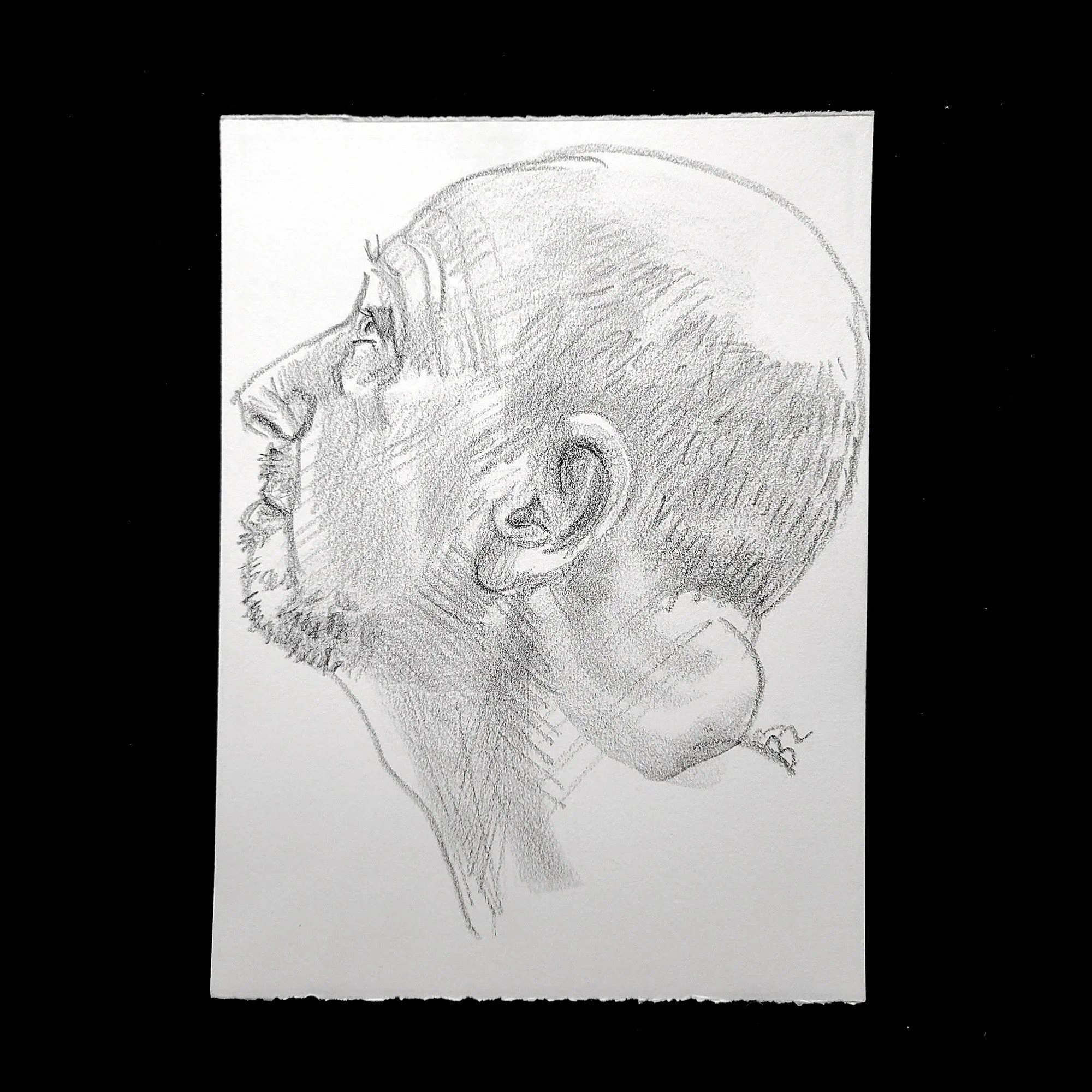
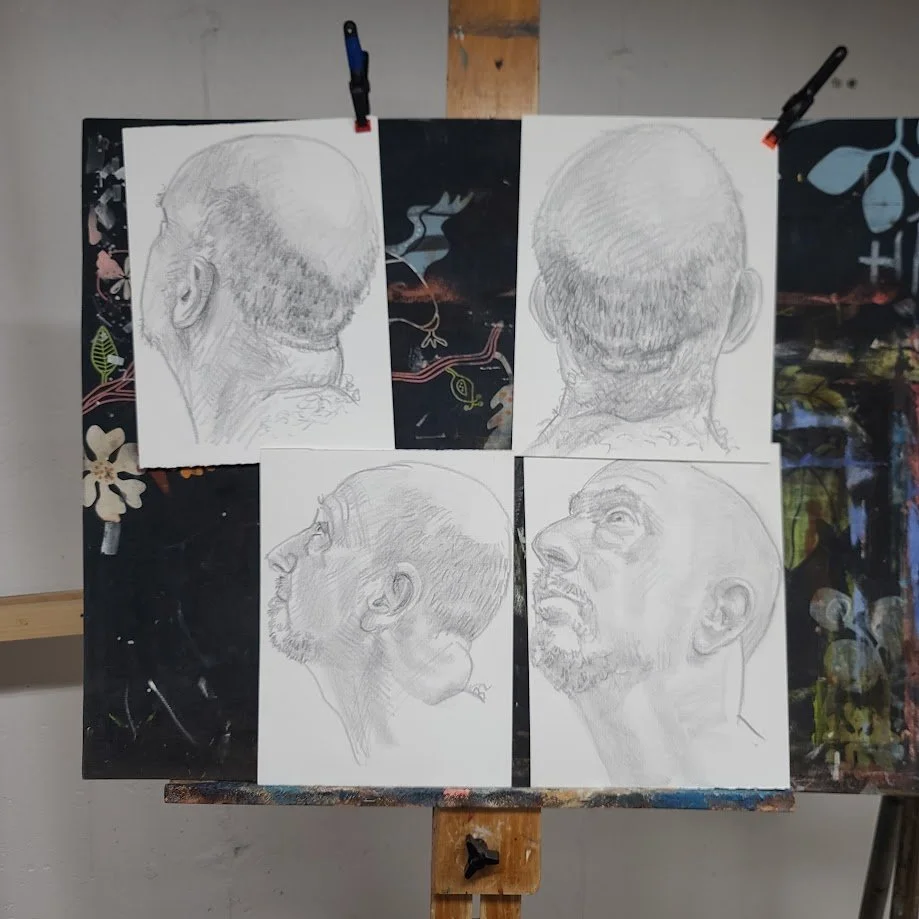
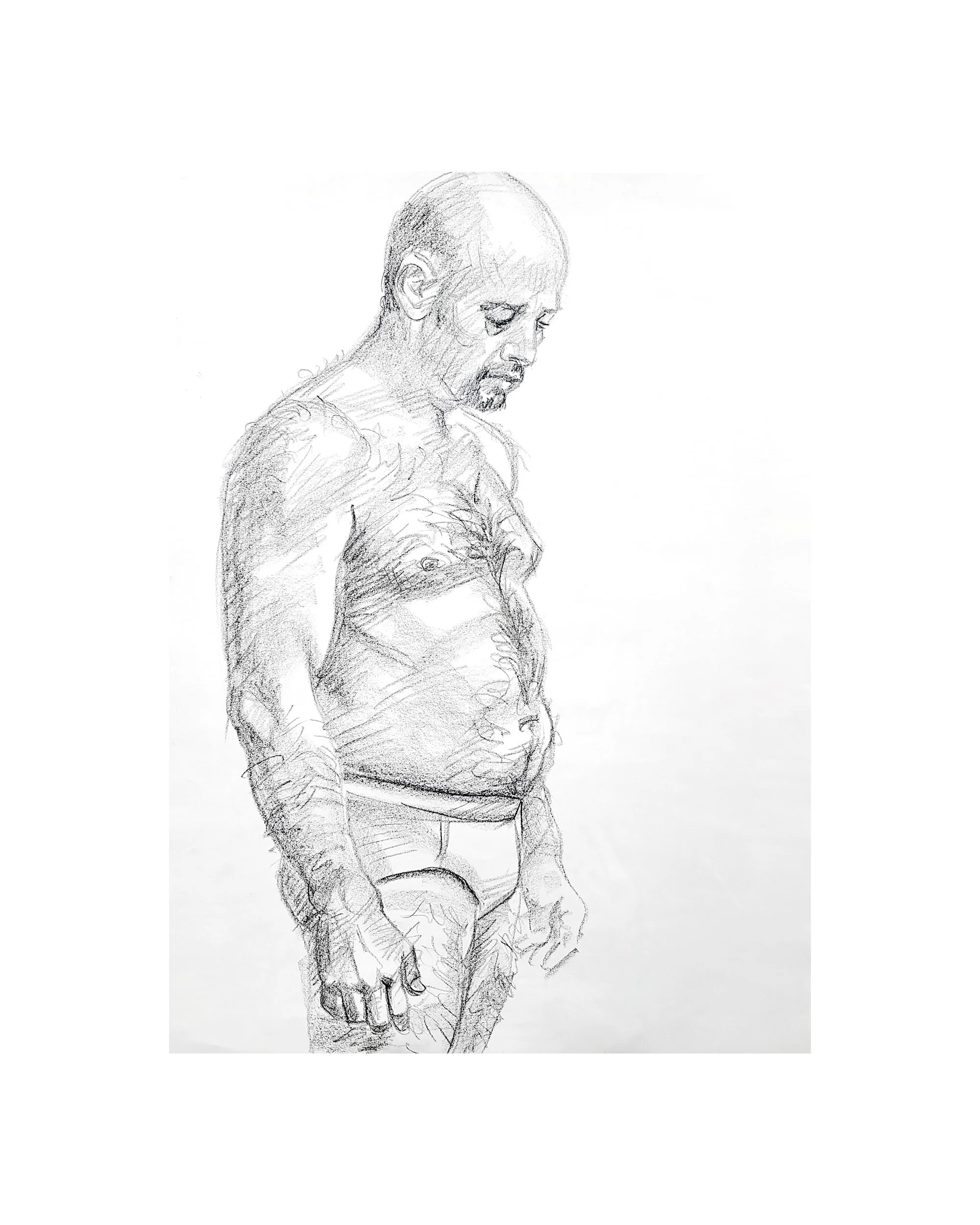
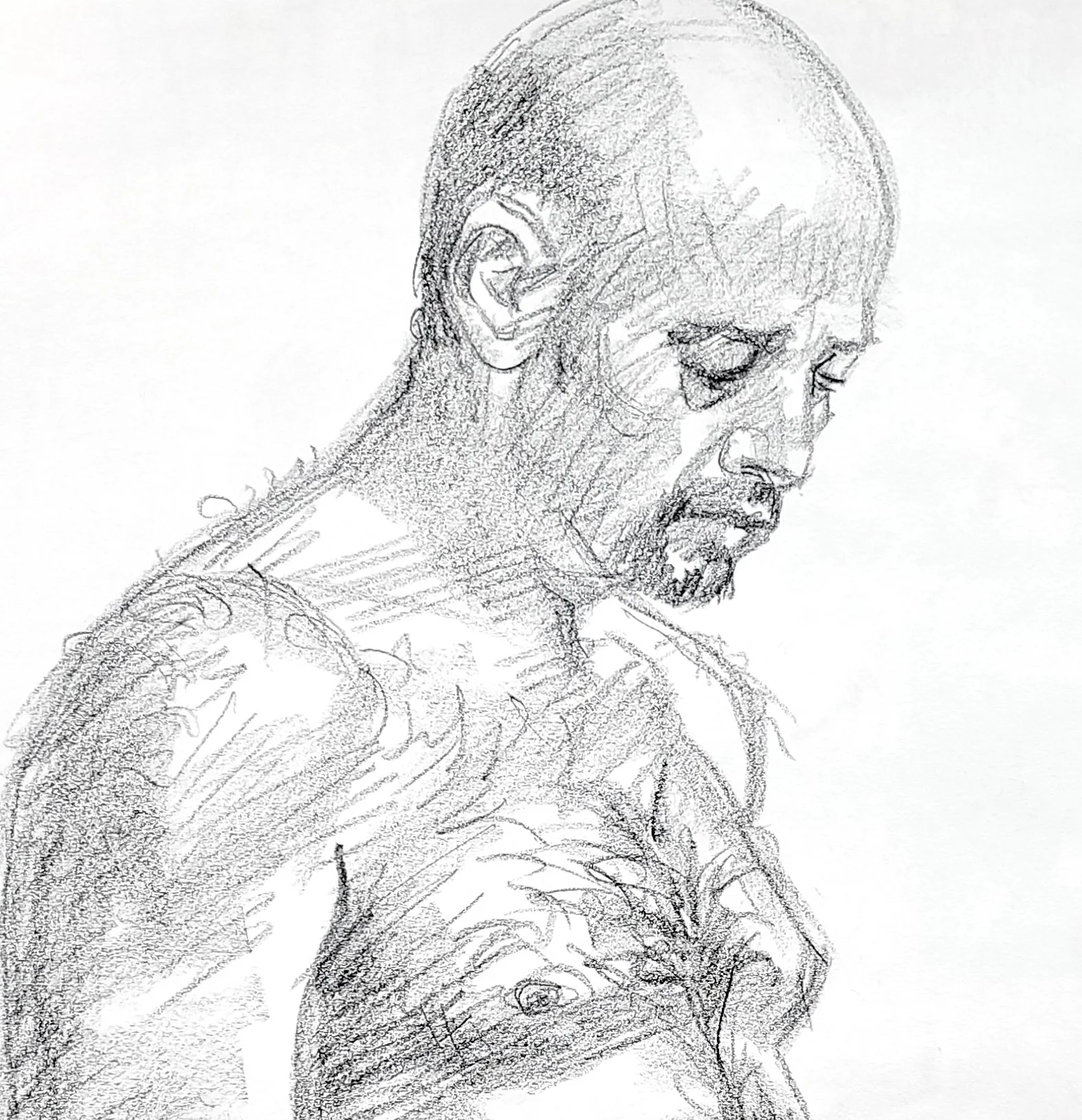
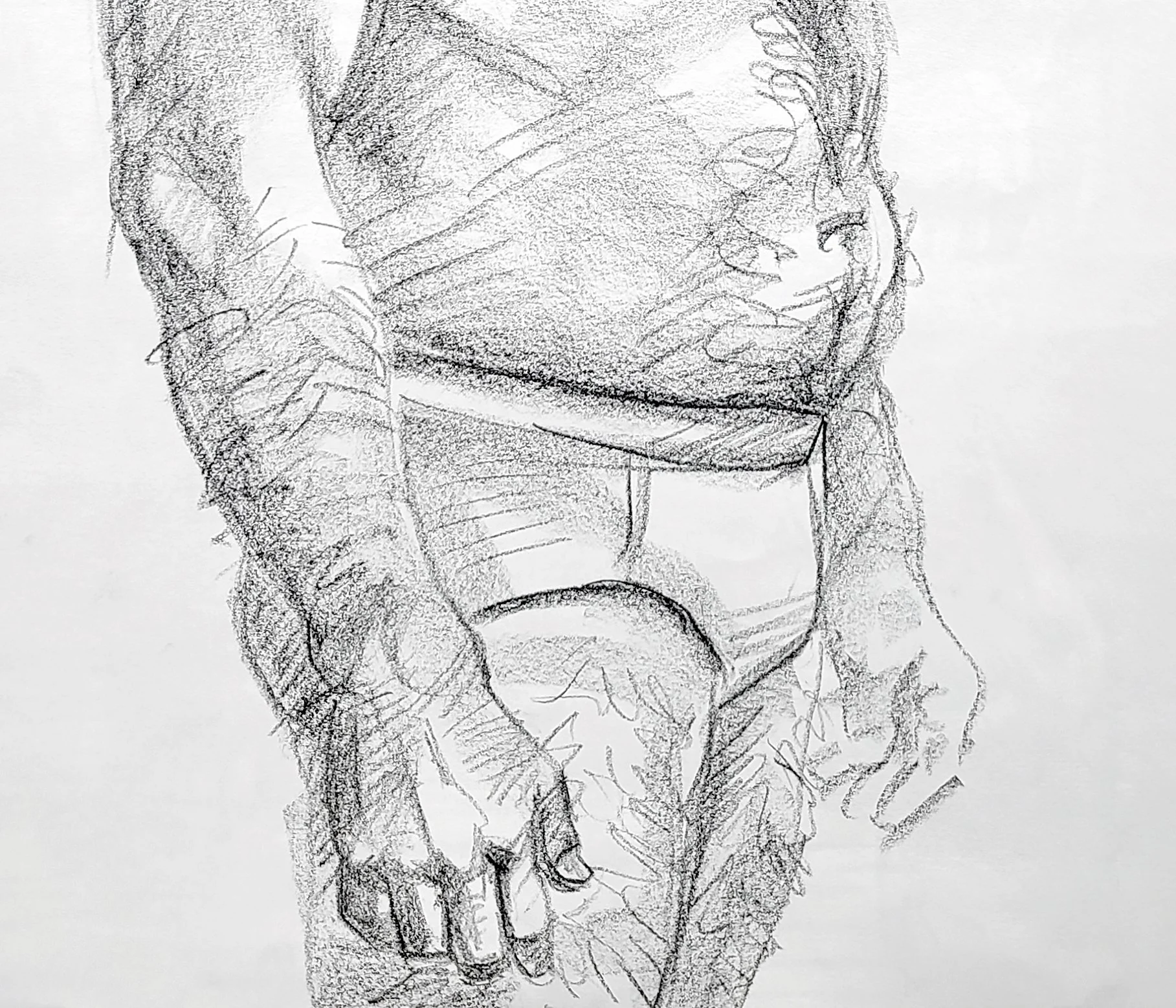
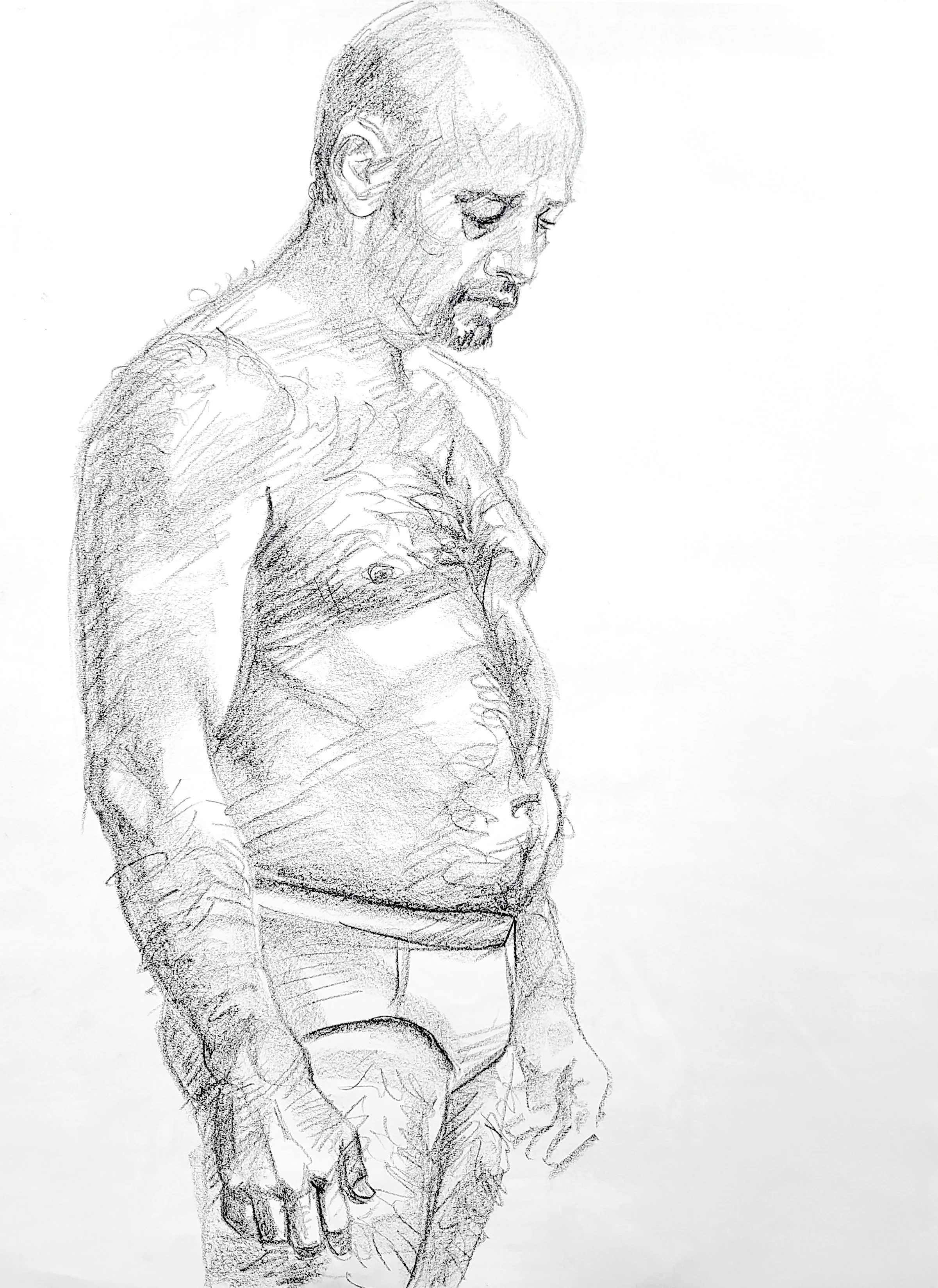
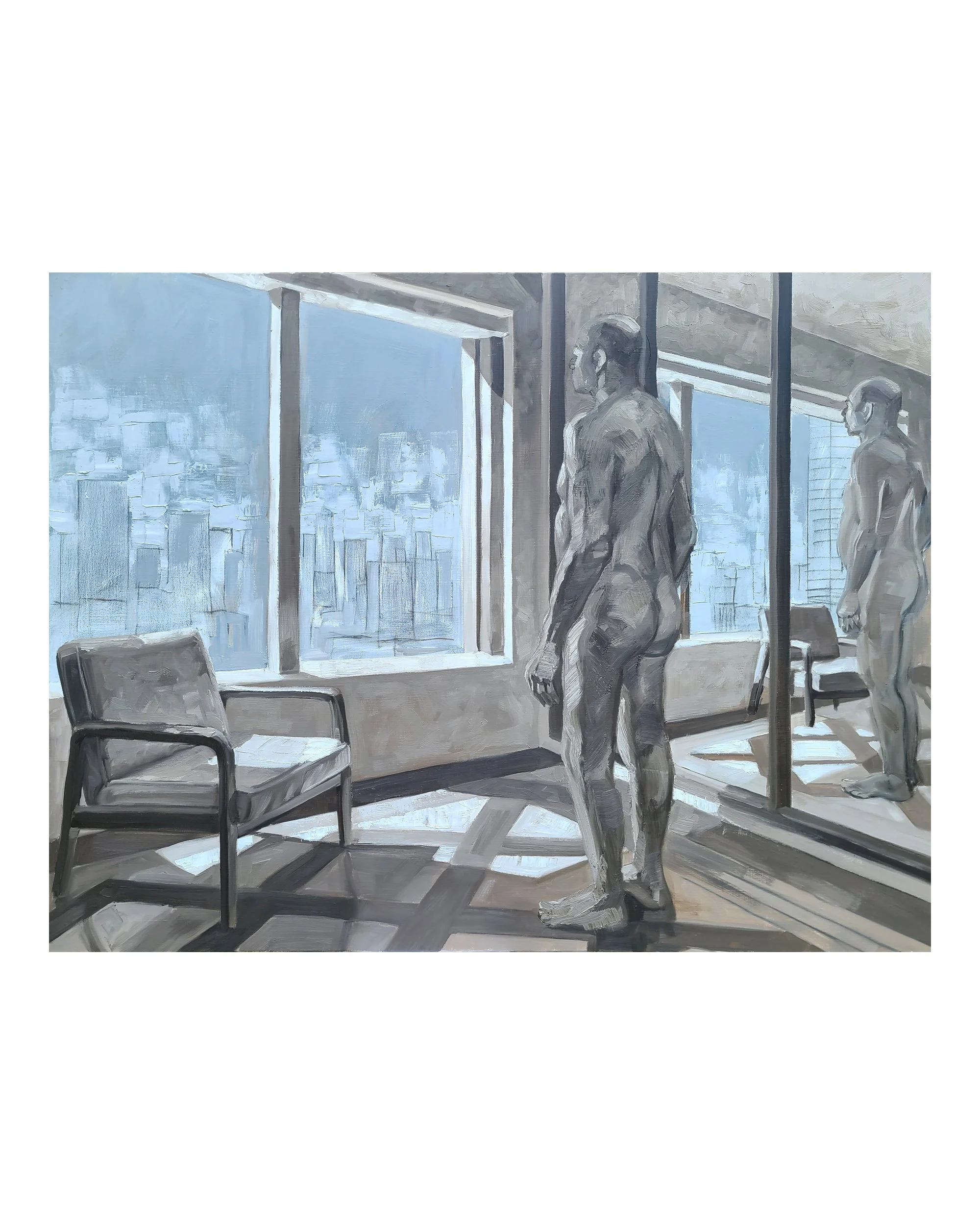
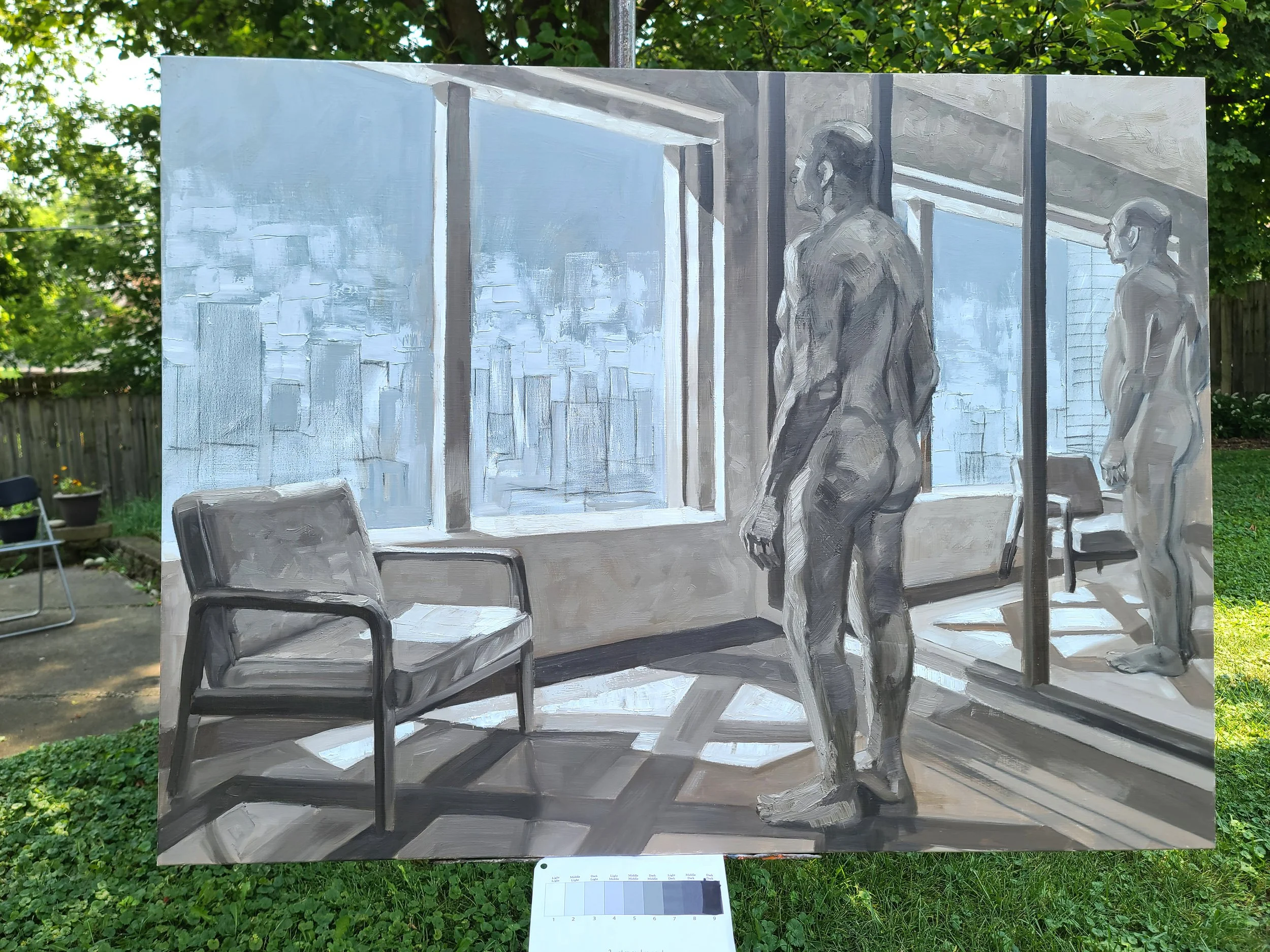
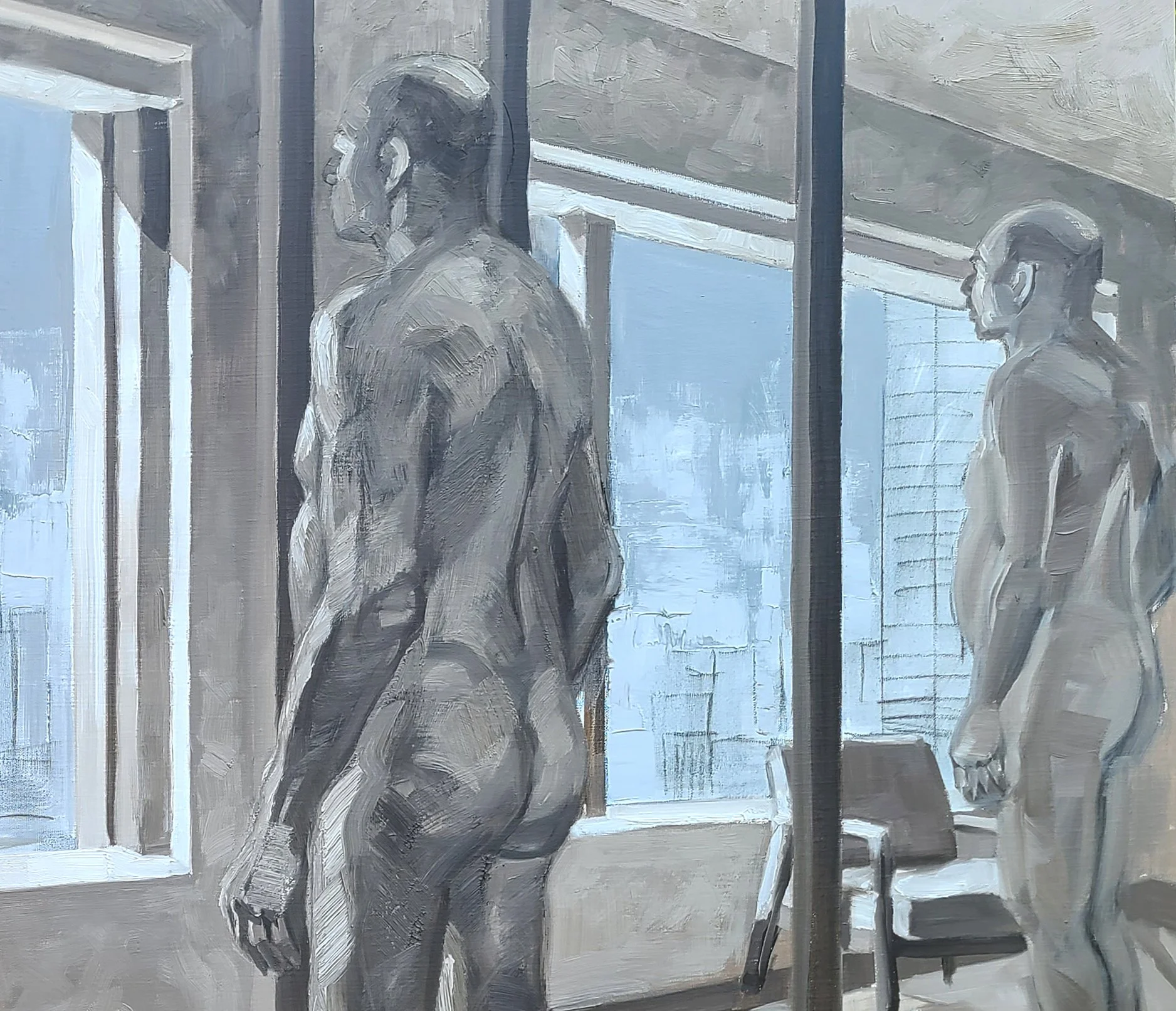
“Self Portrait (Head Study, Rear View Looking Left and Up)” 9 × 12 inches, Crayon on Rives BFK paper
This is a handmade, original work of art NOT A PRINT and NOT AI GENERATED
FREE SHIPPING Shipping takes 3–4 Weeks This ships from San Carlos, California (The San Francisco Bay Area). I use UPS and sometimes US Post.
This self-portrait turns away from the familiar view of a face. With my head turned to the left and tilted up, the back of the skull, the ear, and the neck do most of the work. Only a small part of my face is visible. It gives me another way to study the structure of my own head and how it connects to my body.
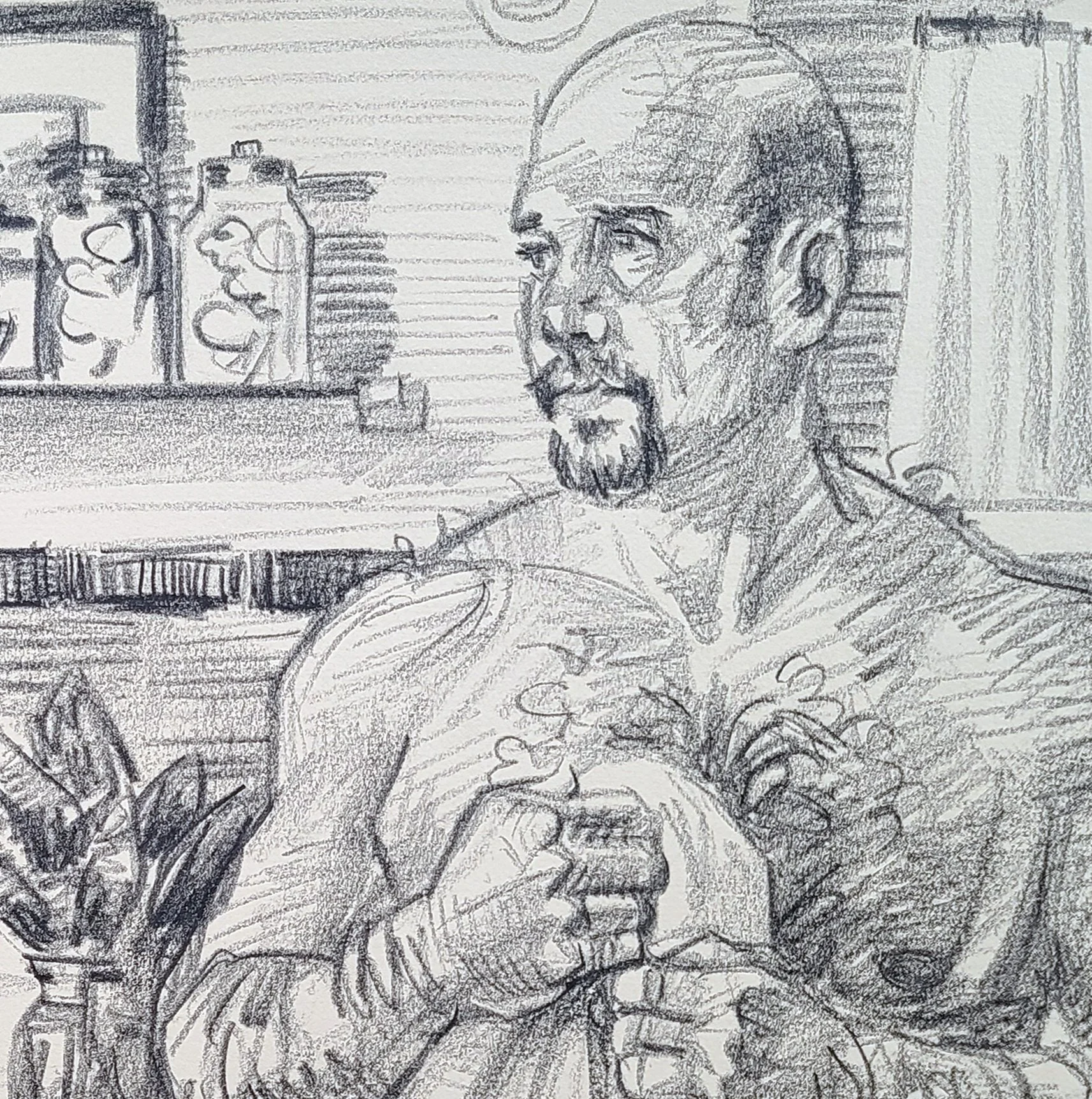
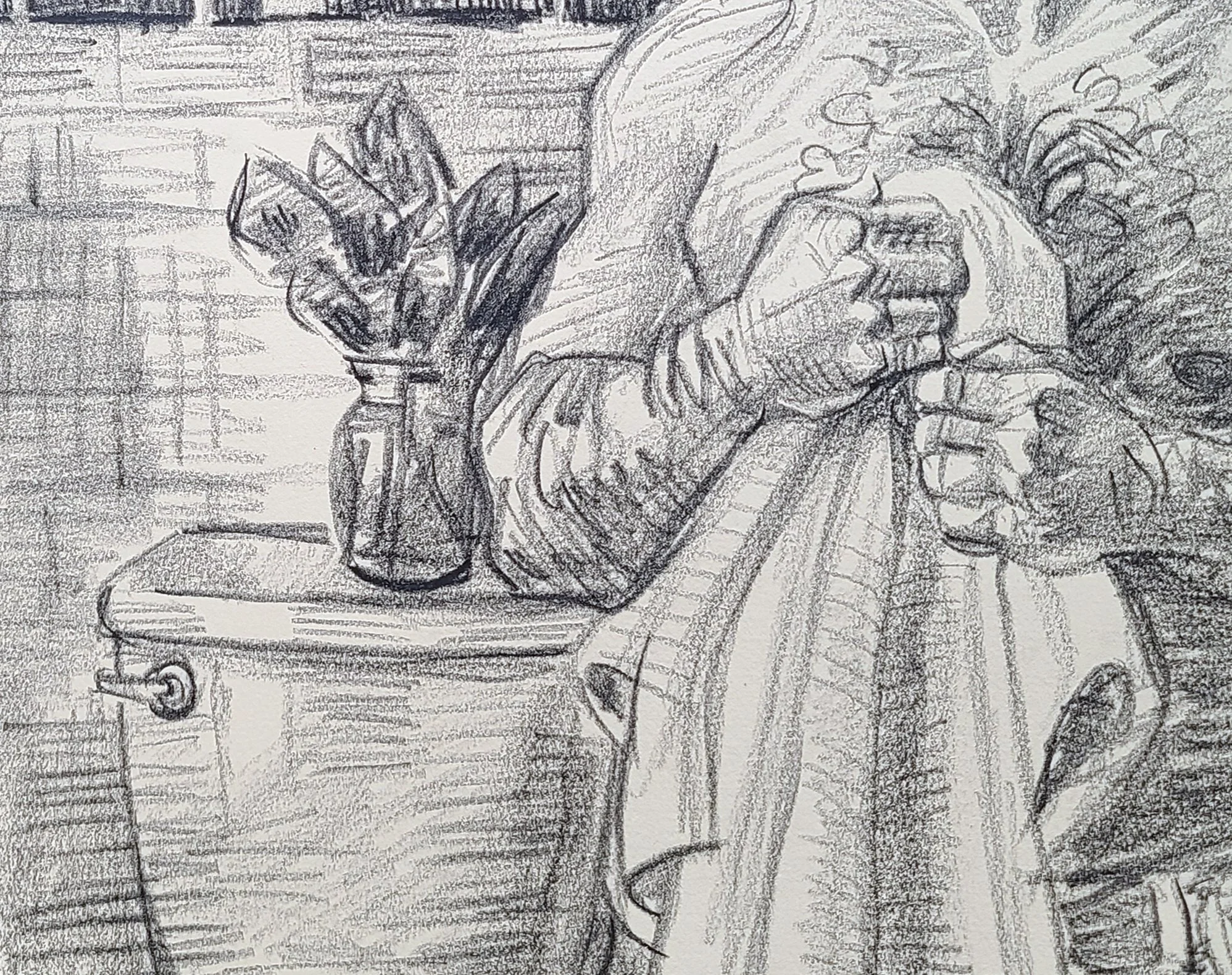
The dark band of hair wraps around the much lighter crown. Short crayon strokes describe the hair, while longer diagonal marks move through the neck. Around the ear, stronger outlines and dark accents sit beside areas where the paper shows through. I like having these different kinds of marks in the same drawing rather than smoothing everything into an even finish.
Like my other self-portrait studies, this is partly a way to understand anatomy and form so I can make better paintings. It is also a place to experiment with line quality, hatching, and contour lines that I might leave exposed in a painting. Looking closely at my own figure gives me both a subject and a practical place to work these things out.
I photographed the drawing against black felt to show the deckled edges of the Rives BFK paper and how the composition sits on the sheet. The black felt is only a photographic backdrop and is not part of the artwork.
 Image 1 of 6
 Image 2 of 6
 Image 3 of 6
 Image 4 of 6
 Image 5 of 6
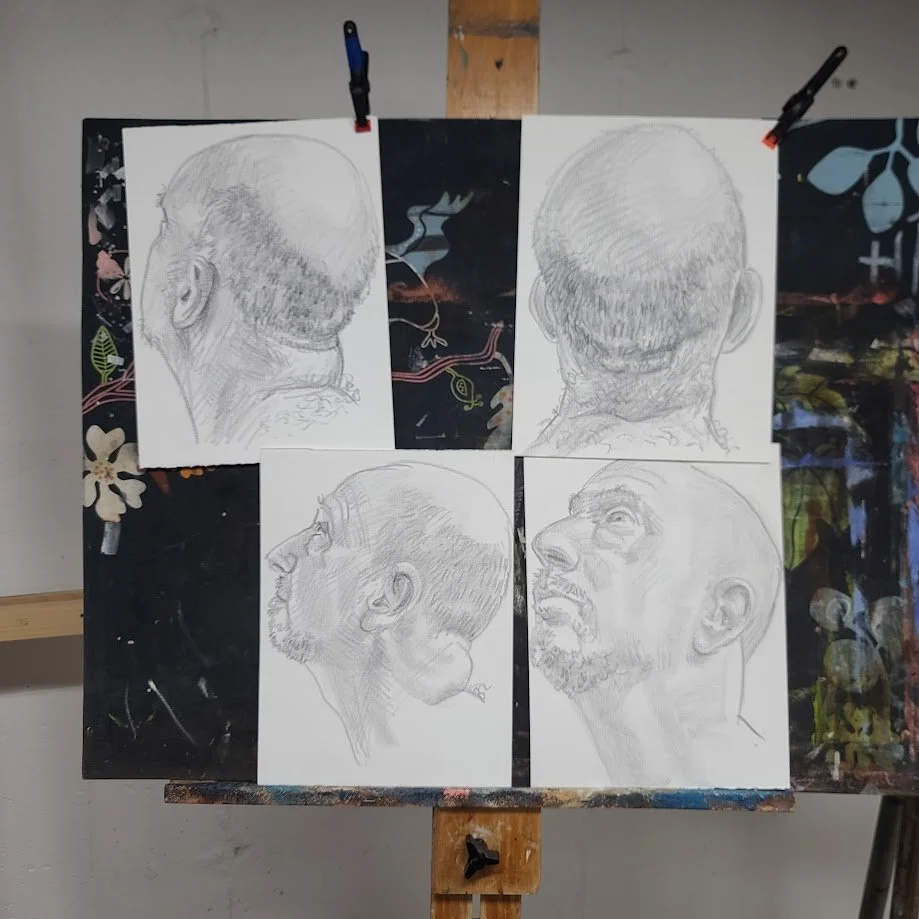 Image 6 of 6