“Longtime Companions (2)” 24 × 18 inches, Crayon on paper
This is a handmade, original work of art NOT A PRINT and NOT AI GENERATED
FREE SHIPPING Shipping takes 3–4 Weeks This ships from San Carlos, California (The San Francisco Bay Area). I use UPS and sometimes US Post.
I can’t wait to get started on this as a painting. I’ve already used these drawings to sketch the composition onto a fresh canvas. This is part of my “Self Directed” series, in which I’m exploring what companionship means as we age.
I made two drawings of the same scene, with small differences in how I rendered particular areas. I think of it a little like a musician making two recordings of the same song, trying out different ways of playing it. The composition remains familiar, but a change in emphasis can affect how the whole thing feels. If you’re interested in collecting one of these drawings, compare them carefully.
One figure sits upright reading, while the other reclines behind him with eyes closed. The open book sits between the two bodies, and the bed, pillows and lamp establish the surrounding room. I’m exploring companionship through an ordinary shared space and the different things two people can be doing within it.
Some of my experiments are with the marks themselves. A contour line, a block of shading and a more gradually shaded passage can describe the same form quite differently. In the first version, the reclining face has more dark lines and small accents. In the second, it remains lighter and more open. The marks describing the bedding change too. These decisions affect where the eye pauses and how solid or loosely suggested a form appears.
The composition is deliberately L-shaped. The upright reader and the arrangement across the bed work against the right angles of the picture. I don’t want the figures floating in the middle like a vignette. I want them to meet the edges, with the lower legs cropped and parts of the bed continuing beyond the frame. Leaving out some details helps keep attention on the bodies, the book and their relationship.
Since I teach art history, I often connect this kind of cropping with the Impressionists and their interest in photography. I like the sense of a scene continuing outside the picture. These drawings let me work through that composition and the possibilities of the marks before I carry them into paint.
Check this out for art history stuff: Guggenheim on Degas, cropping and photography.
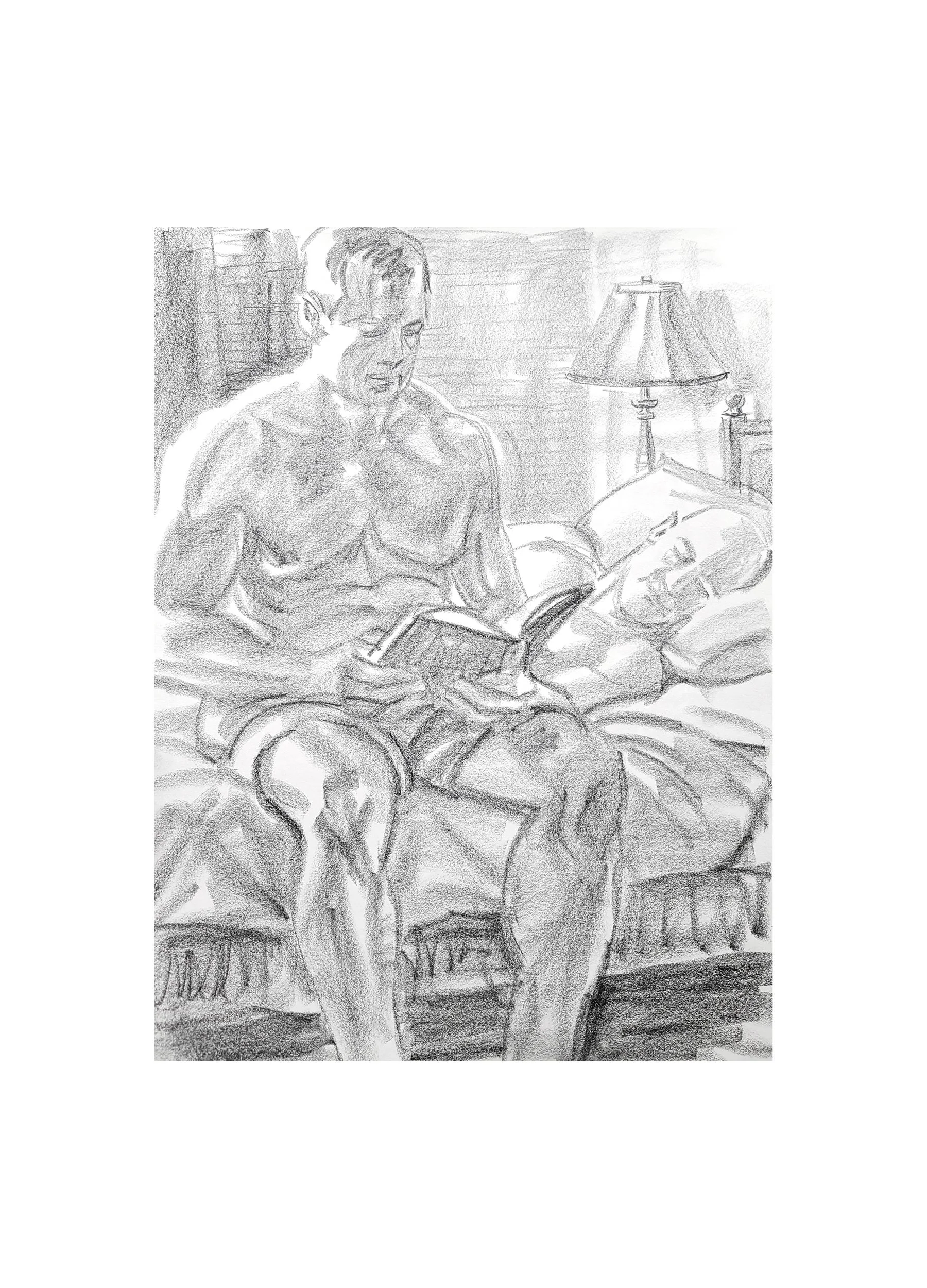 Image 1 of 6
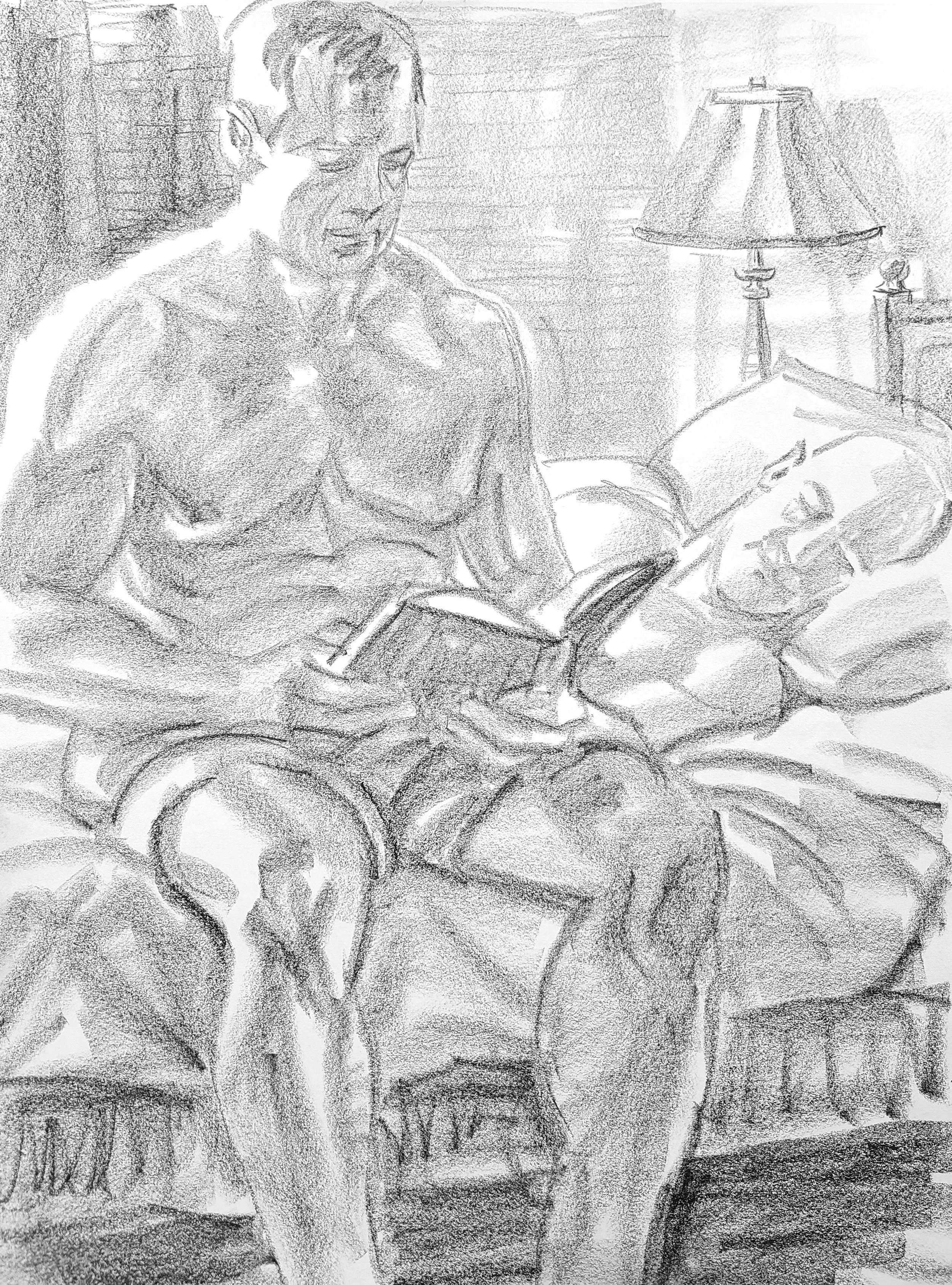 Image 2 of 6
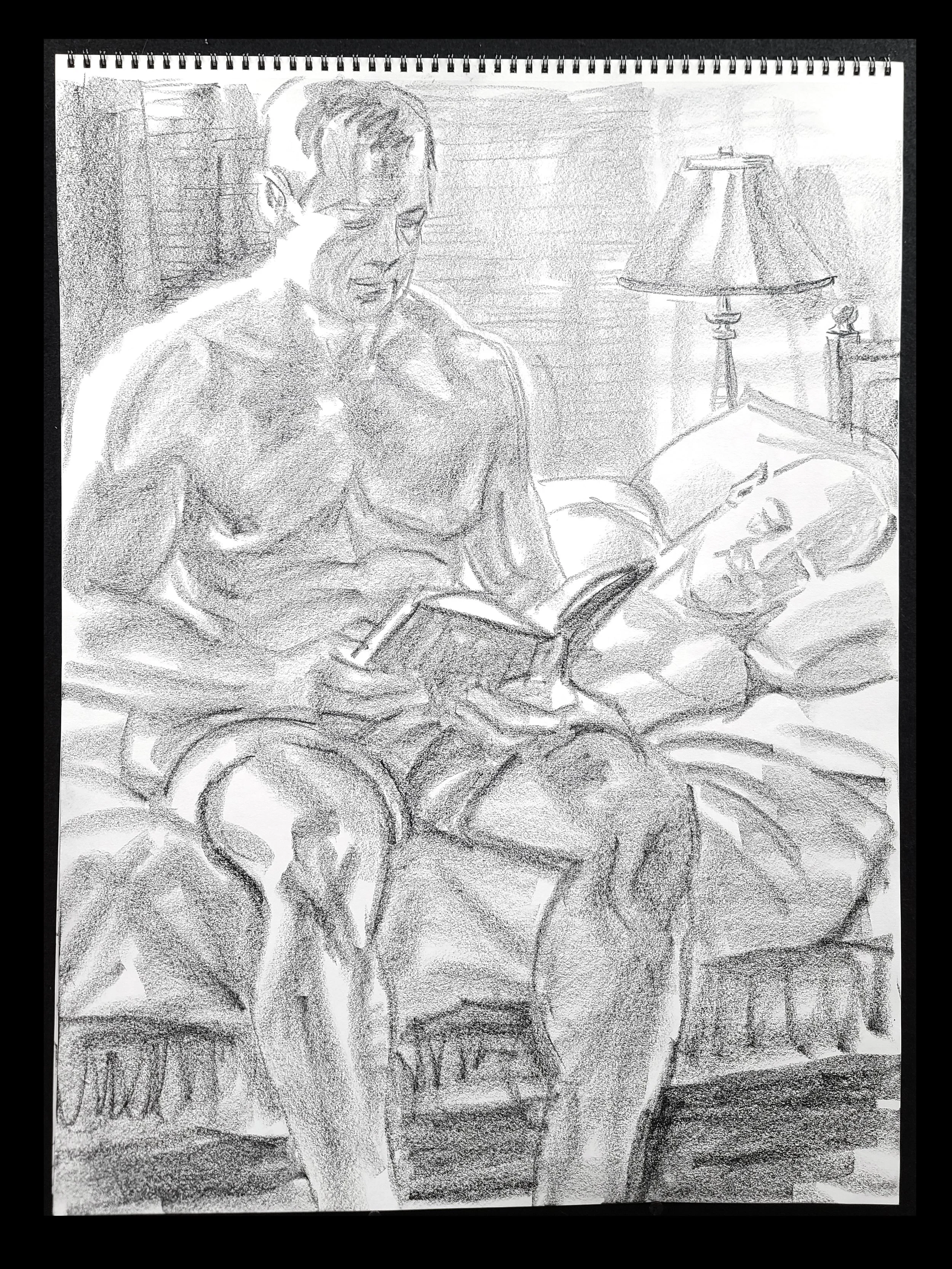 Image 3 of 6
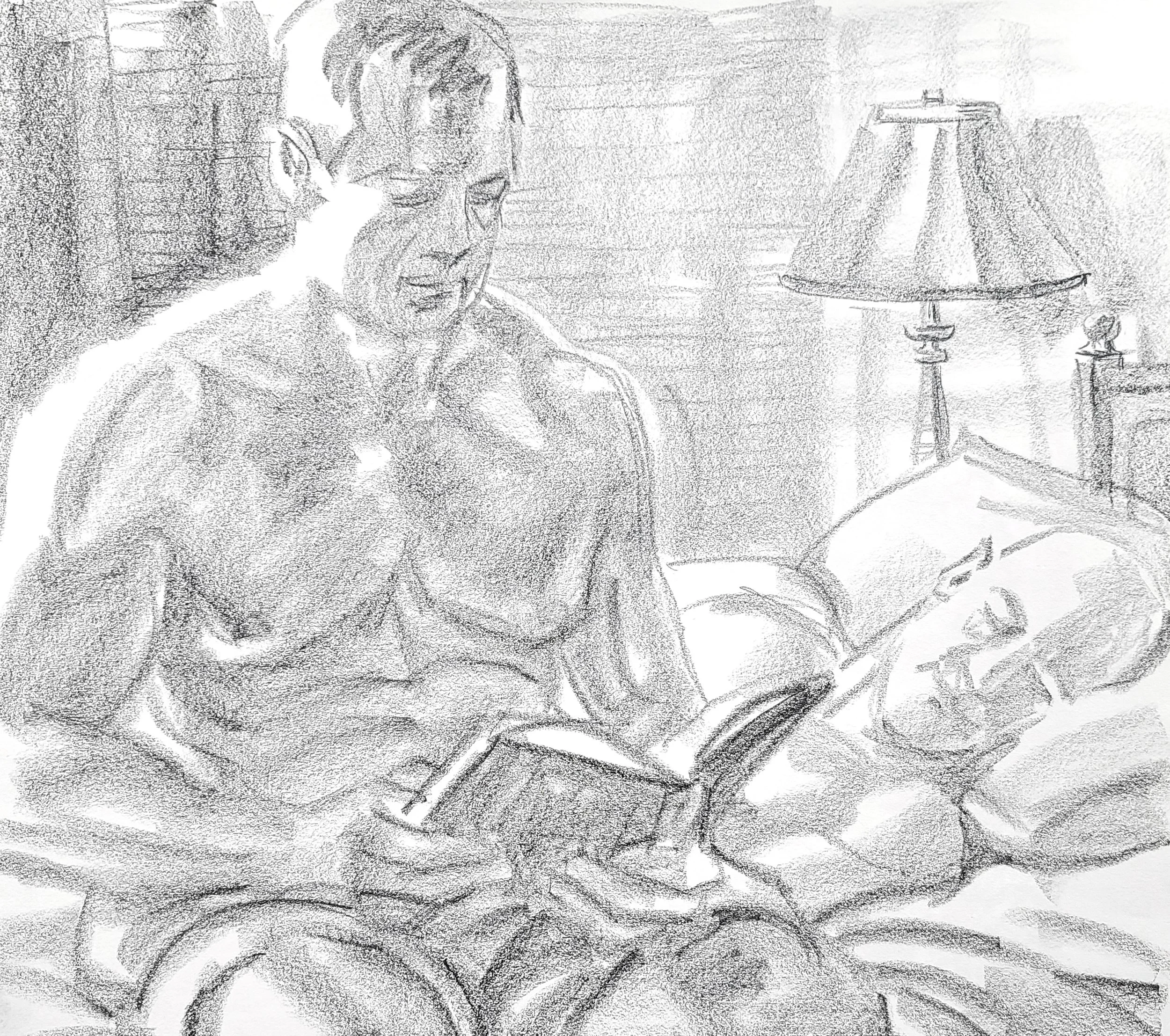 Image 4 of 6
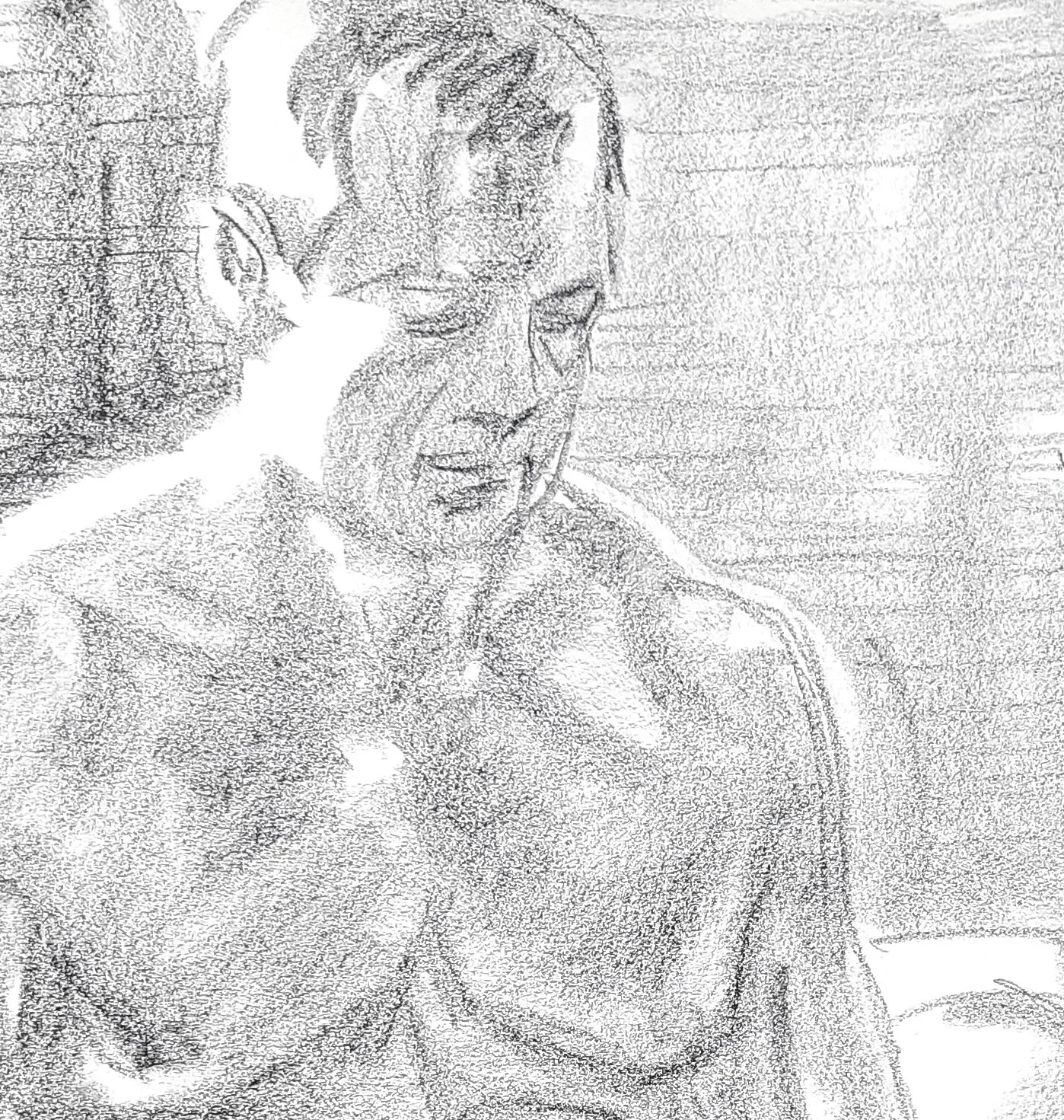 Image 5 of 6
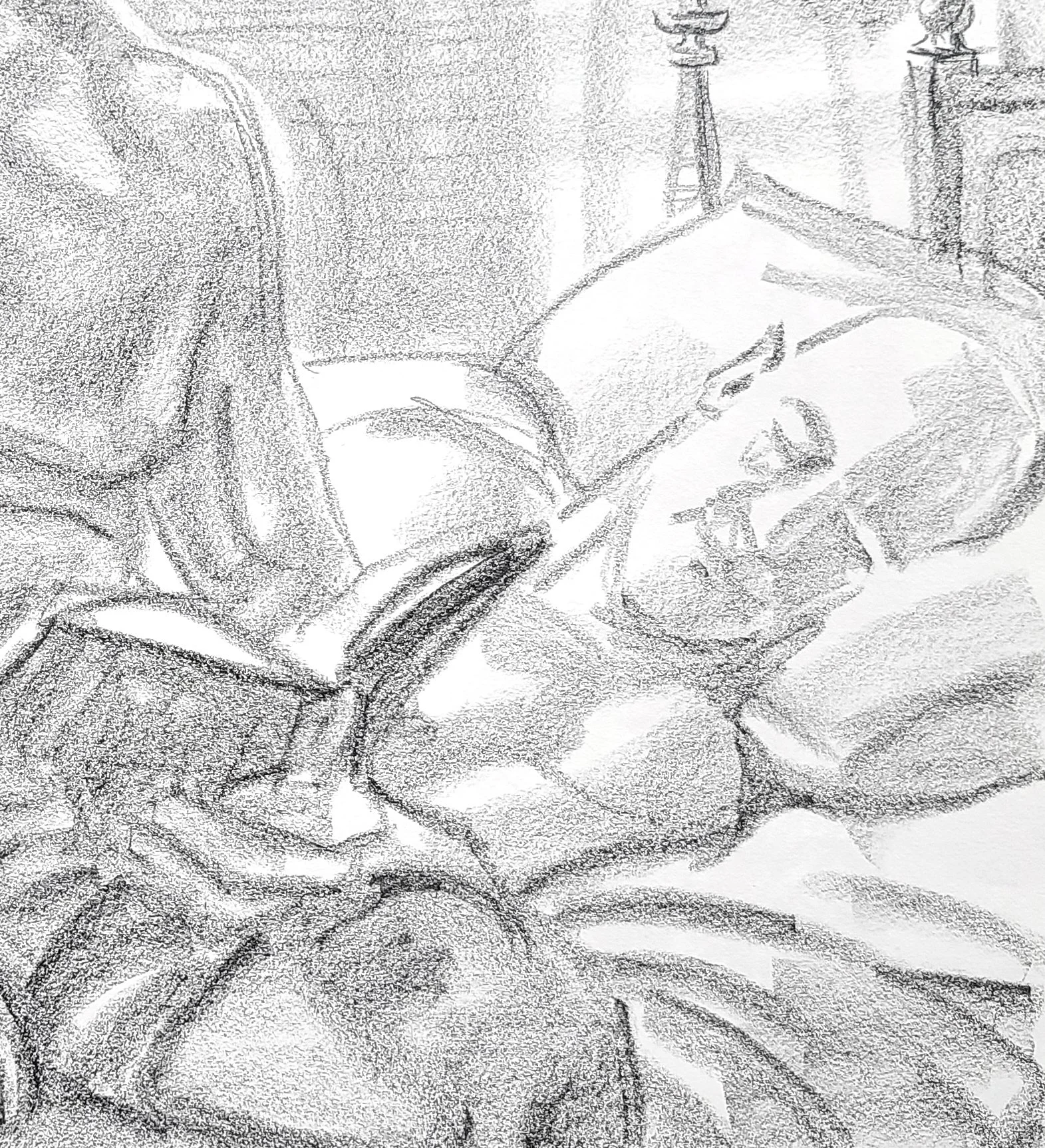 Image 6 of 6


