Image 1 of 3
 Image 2 of 3
 Image 3 of 3
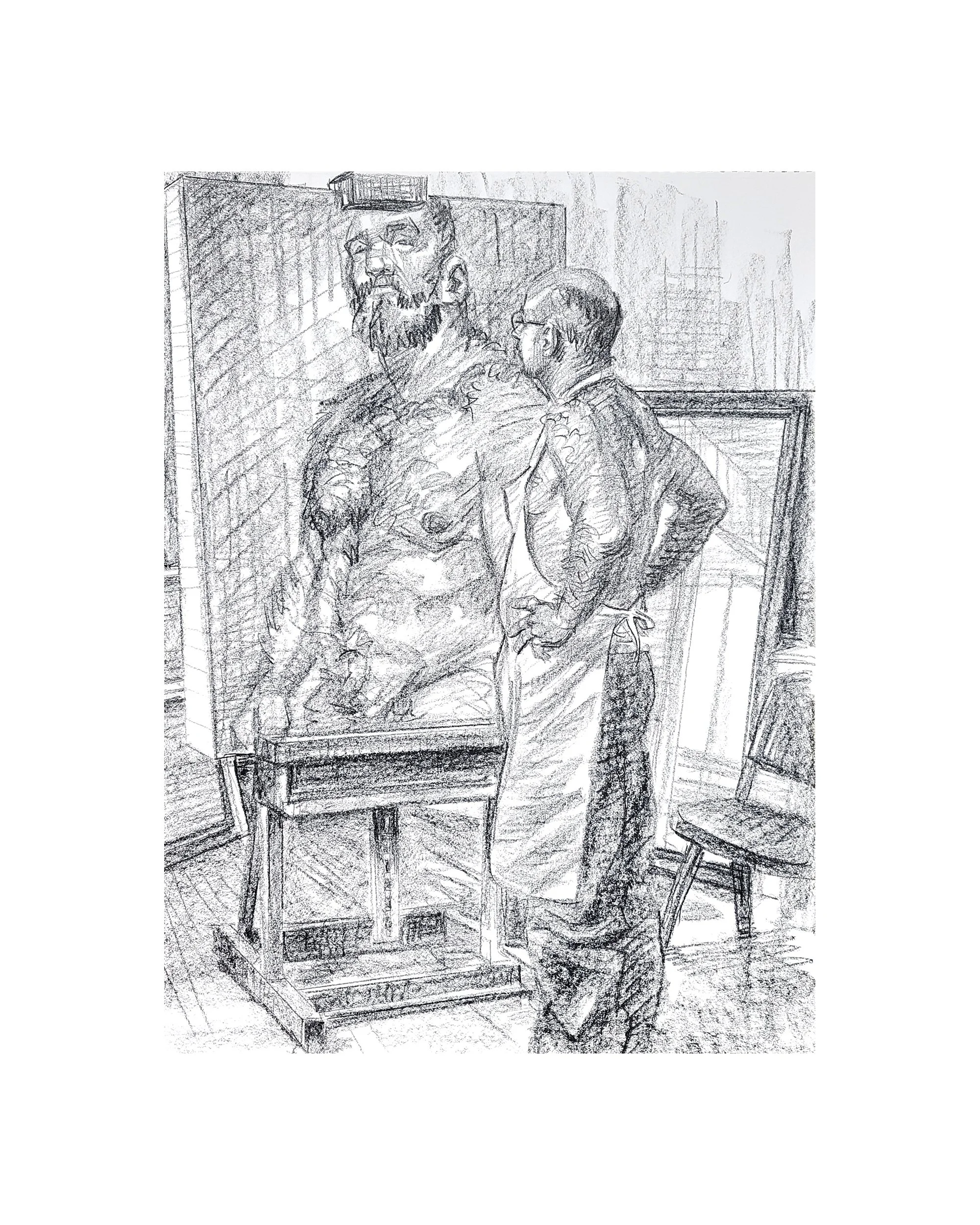
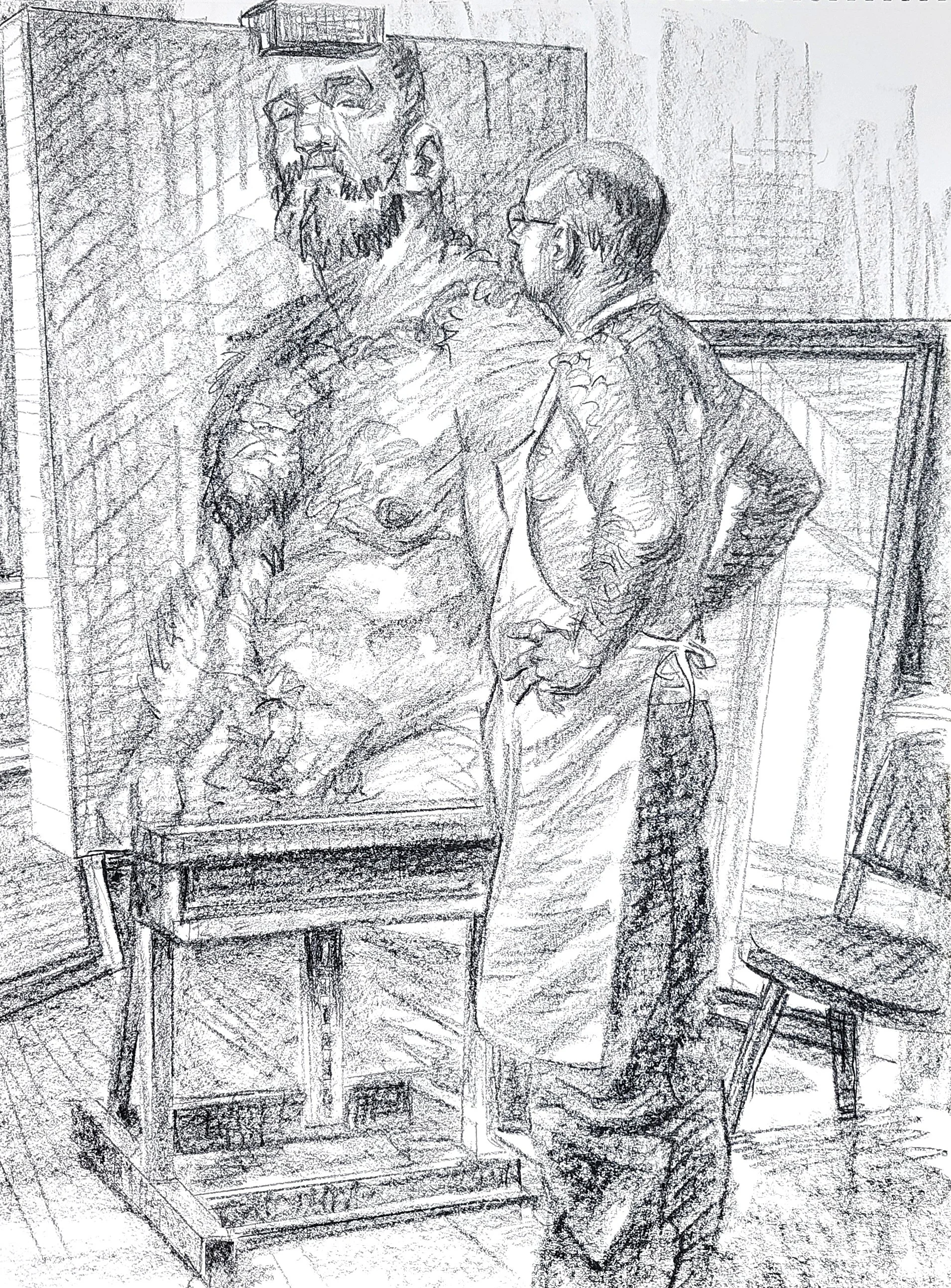
"Afternoon Art History Lecture, Ohlone College, Fremont, California"
22 × 30 inches, crayon on toned Rives BFK paper
I left a tenured teaching position in 2016. Leaving gave me a freedom I needed, but it also meant losing some important parts of my life. I still teach part time and offer art history courses online through Udemy. I’m still a professor. That identity didn’t disappear when I left the job. This drawing has a lot to do with living between the person I was and the person I’m becoming.
I’m presently reading Christopher Isherwood’s novel "A Single Man." While it didn’t inspire this drawing, which I am also developing into a painting, parts of the novel reflect feelings and behaviors I recognize from my own life as a college professor. Isherwood captures a particular ambivalence. There’s the desire to change the world and the almost compulsive need to share an insight because you think it might matter to someone. There’s also the resistance of students, the resistance of other academics, and the absurdity of academic life in general. I’ve often felt like two people at once, an automaton performing the familiar routines of teaching and a sincerely caring person who still believes the ideas are worth sharing.
In the drawing, I’m leaning forward over a table and an open book. We look past the students toward the professor and the projected image behind him. The Medici tomb figure is part of the lesson, but it also carries something personal. It references the death of one part of my life and the birth of another. Leaving academia meant liberating myself from some of its demands while also giving up things I valued. I’m still working out what I’ve left behind and what remains part of me.
The figure on the screen also connects to my five-month trip through Europe. I finally saw, in person, works I had spent years admiring and teaching through reproductions. I knew their images long before I stood in front of the actual objects. That experience made me think about the difference between familiarity with an image and being physically present with something. It also made me reconsider what I wanted from my own work.
I think of the classroom as a liminal space. It’s a place where we move between what we know and what we might come to understand. The tomb is another kind of threshold, and these associations bring me back to Plato’s "Republic," particularly the "Allegory of the Cave." I’m thinking about those ideas through their renewed importance in the Italian Renaissance, through the Medici tombs, and through a classroom where we sit looking at projected images. Teaching, travel, and making art all become ways of examining the relationship between representations and experience.
The style of the drawing deliberately carries some of my academic training with it. Working with dark and light marks on toned paper refers to the traditional use of black and white chalk. Here, I’m using a mixture of crayons chosen for permanence on Rives BFK paper. The tone of the sheet provides a middle value. Dark marks build the shadows, while white brings forward the shirt, the tabletop, and the illuminated screen. The overlapping lines and varied textures leave the work of drawing visible.
These questions belong within "Self Directed." Aging is a universal process, and coming to terms with change increasingly shapes my iconography, the people, objects, and spaces I choose to depict. In this drawing, the professor, the students, the book, and the tomb figure bring different parts of my life into the same room. I’m trying to understand how those parts continue to coexist as I decide what to do next.